
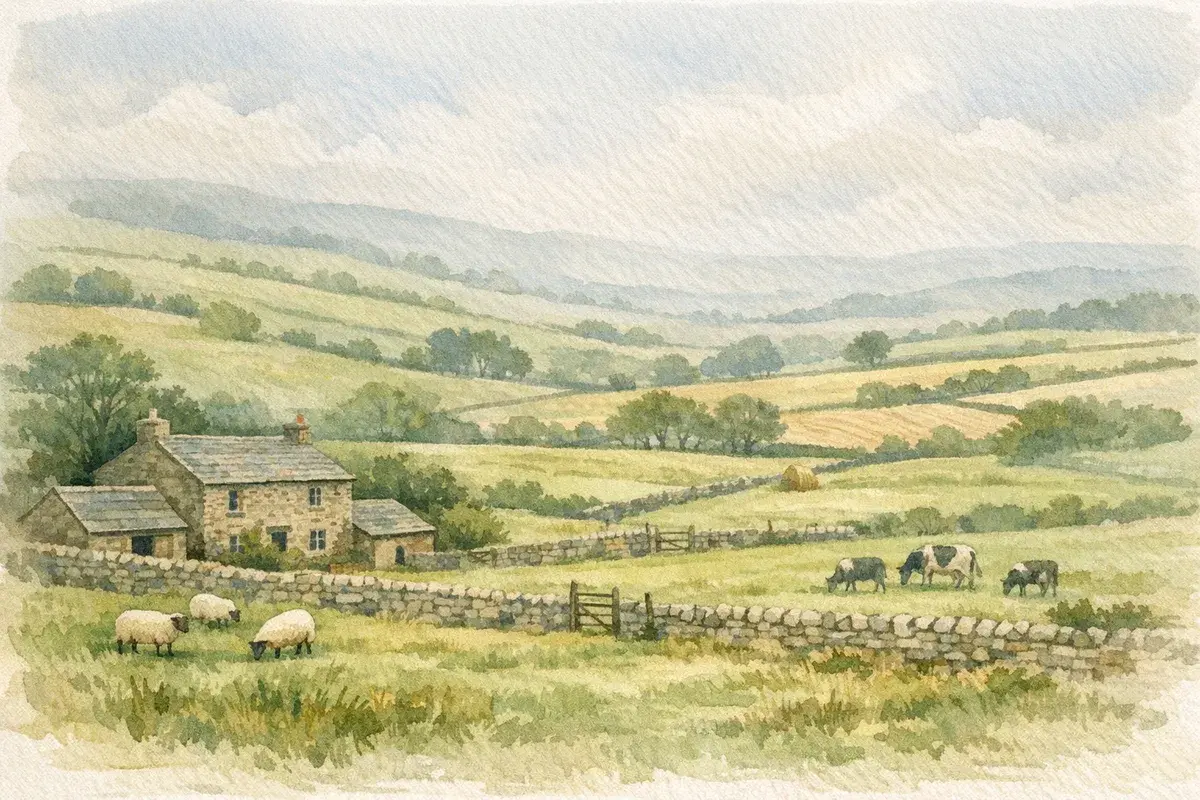
You don't usually discover Agricultural Property Relief (APR) when things are calm. It tends to surface in the middle of a tough conversation: succession planning, a family dispute, a partnership breakup, or an estate administration where the inheritance tax (IHT) bill suddenly looks… unpayable.
APR can be incredibly valuable, but it's not a "farms = tax relief" free pass. HMRC looks closely at what the asset is, how it's used, who occupies it, and whether the farmhouse genuinely functions as the centre of a working farm. Small details, an informal grazing arrangement, a diversified building let, a lapsed cropping record, can swing the outcome.
This guide is written as a practical eligibility checklist to help you answer the real question: do I qualify for agricultural property relief, and if so, on which bits of your land and buildings, and at what rate?
What Agricultural Property Relief (APR) Is And Why It Matters For Inheritance Tax
APR is an inheritance tax relief that can reduce the taxable value of qualifying agricultural property when it transfers on death (or in some lifetime transfers, depending on the circumstances). In plain terms: if your land and certain buildings meet the rules, HMRC may treat some (or all) of their value as relieved from IHT.
That matters because rural estates are often asset-rich and cash-poor. Land values have risen over decades, while the cash available to pay a tax bill hasn't always kept pace, especially where the "business" is built around long-term stewardship, not extracting profit.
APR is only one part of the IHT picture, and it's frequently used alongside (or confused with) other reliefs. If you want the full rules and planning context in one place, it's worth reading AgLand's primer on how APR works in the UK once you've finished this eligibility checklist.
How APR Works In Plain English: 100% Vs 50% Relief
APR generally applies at either 100% or 50%, and which rate you get isn't a vibe-check: it's about the type of asset and the nature of occupation/tenancy.
- 100% APR can apply to qualifying agricultural property in the right circumstances (often where the owner is in occupation for agriculture, or where tenanted land meets the rules).
- 50% APR can apply in other cases, including some situations involving land and buildings where the conditions for 100% aren't met.
One of the most common reasons people misjudge their position is assuming their whole farm "gets 100%". In reality, APR is often patchy across an estate: the in-hand land may qualify, the farmhouse may qualify (but only if it passes a specific test), a let barn conversion may not, and development hope value may sit outside the relief.
If you're trying to sanity-check whether you might be in the 100% camp, AgLand's explainer on when full APR can apply is a useful companion.
APR Vs Business Property Relief (BPR): Where People Get Caught Out
APR is about agricultural property and agricultural use. BPR (Business Property Relief) is about trading businesses and certain business assets.
Where you can get caught out:
- Diversification income (storage lets, solar, weddings, commercial units) can be brilliant for resilience, but it may pull value away from APR, and it may or may not be in BPR territory depending on whether it's a trading activity or investment activity.
- Let land can still qualify for APR, but the relief rate and conditions can be sensitive to the tenancy structure.
- Farmhouse claims are often contested because HMRC looks for a genuine working relationship between the farmhouse and the agricultural operation.
The punchline: don't treat APR and BPR as interchangeable labels. They're different reliefs with different triggers, and the safest approach is to map your assets and activities deliberately rather than hoping everything falls under one umbrella.
The Core Eligibility Tests: Land, Use, Occupation, And Purpose
If you're asking "do I qualify for agricultural property relief", you need to think like HMRC for a moment. HMRC isn't assessing your identity ("you're a farmer, hence…"). It's assessing the asset and the facts on the ground.
There are four practical tests you'll keep coming back to:
- Is it agricultural property?
- Is it used for agriculture?
- Who occupies it, and how?
- Is the purpose genuinely agricultural (not lifestyle, not primarily investment, not primarily development)?
For a deeper run-through of the formal conditions, see AgLand's guide to the APR qualification criteria.
What Counts As "Agricultural Property" (And What Usually Doesn't)
In broad terms, agricultural property is agricultural land or pasture, and it can include certain buildings that are occupied with that land and used in the agricultural operation.
What often counts (fact-dependent):
- Arable, grassland, permanent pasture used as part of a farming operation.
- Farm buildings used for agriculture (storage, livestock housing, machinery sheds), where they're part of the farm's working setup.
- Woodland can be relevant where it's occupied with agricultural land and part of the agricultural unit (but woodland brings extra nuance, don't assume).
What often doesn't (or only partly counts):
- Pure development value ("hope value" for housing/industrial change of use).
- Property mainly used for non-agricultural purposes.
- Amenity land that's nice to have but not really part of agriculture.
The main idea: APR follows agricultural character and agricultural use, not simply rural geography.
The "Character Appropriate" Test: Farmhouses, Cottages, And Farm Buildings
This is where eligibility conversations get tense, because it's not just paperwork, it's judgement.
For a farmhouse to qualify, it typically needs to be:
- Occupied for the purposes of agriculture, and
- Of a character appropriate to the agricultural land being farmed.
"Character appropriate" isn't about whether the kitchen is modern. It's about whether the house makes sense as the operational hub of the farm given the scale and nature of that farm. HMRC will look at the size, quality and nature of the dwelling versus the farming activity.
Common pressure points we see in practice (and that agents and advisers flag repeatedly):
- A substantial farmhouse attached to minimal in-hand farming.
- The agricultural work is carried out elsewhere, while the farmhouse looks more like a standalone residence.
- The farmhouse is occupied by someone not meaningfully involved in the farming.
If the farmhouse is a key part of your question, you'll want to read AgLand's dedicated guide on the farmhouse rules and pitfalls and treat it as a "red flag" area for adviser input.
Occupation And Use: Owner-Occupied, Let, Contract Farmed, Or Grazed
Occupation and use are where good farms sometimes create accidental risk.
- Owner-occupied (in-hand) land farmed by you (or your farming partnership/company, depending on structure) is often the cleanest APR fact pattern, assuming the use is genuinely agricultural.
- Let land can qualify, but tenancy type and occupation periods matter (we'll cover that below).
- Contract farming can still support APR, but it's crucial to evidence that you are farming (bearing risk and making key decisions) rather than merely receiving a rent-like return.
- Grazing licences can be fine in the right context, but a "handshake licence" with no paperwork, unclear responsibilities, and payments that look like rent can create an avoidable argument.
The practical takeaway: APR claims succeed on evidence, not intention. If the arrangement is real farming, document it like real farming.
The Ownership And Occupation Period Rules: The 2-Year And 7-Year Tests
Even if your land and buildings look like classic agricultural property, APR can still fail if you don't meet the minimum ownership/occupation period rules.
You'll hear people call these the "2-year rule" and "7-year rule". They're shorthand, but useful shorthand.
For most owners, the key question is: have you owned and (where relevant) occupied the property for long enough in the right way?
If you want to cross-check the finer points and edge cases, AgLand has a clear explainer on the APR ownership time limits.
When The 2-Year Rule Applies (Owner-Occupied Or Partnered In The Farming)
The 2-year test often becomes relevant where:
- You own the agricultural property and it's occupied by you for the purposes of agriculture: or
- It's occupied by someone else but within a structure that still counts as you being sufficiently connected to the farming activity (this is where professional advice is valuable).
In real life, the 2-year test can bite when:
- You've recently bought land and are already thinking about succession planning.
- You've reorganised the farm (new partnership/company) and occupation has changed.
- You've taken land back in-hand after a tenancy.
The "gotcha" is timing: it's not enough that you intend to farm it properly. HMRC will look for evidence that it has been occupied and used for agriculture in the qualifying way for the relevant period.
When The 7-Year Rule Applies (Let Land And Certain Tenancies)
The 7-year test often comes up for let land and certain arrangements where you're not the occupier farming it day to day.
This is where family estates with long-standing lettings can be surprised. You might think, "It's been let for decades, surely it qualifies." It might, but tenancy type, the nature of the letting, and how the land is used all play into the analysis.
If your APR question is mainly about let land, AgLand's resource on APR and tenanted farmland is the most direct next read.
How Changes In Use Or Tenancy Can Reset The Clock
APR is sensitive to change. The clock isn't something you set once and forget.
Changes that can cause problems include:
- Switching from a clear farming use to a non-agricultural use (even temporarily) without understanding the consequences.
- Ending a tenancy and leaving land idle, or using it mainly for amenity, while still assuming it's "farm land".
- Replacing a written agreement with an informal arrangement that's harder to evidence.
This doesn't mean you can't adapt your business. You can. But you should treat major changes, new lettings, new diversified income, development agreements, farm restructuring, as moments to re-check APR rather than assuming it will look after itself.
Tenancies And Letting Structures: Getting APR Right On Rented Land
Rented land is where APR gets technical quickly, yet it's also where a lot of UK estates and family farms live day-to-day. The issue isn't that letting is "bad". It's that the legal structure and practical reality need to match what APR expects.
Pre-1 September 1995 Tenancies Vs Post-1995 Farm Business Tenancies
In England and Wales, you'll commonly hear people distinguish:
- Older-style tenancies (often under the Agricultural Holdings Act 1986), and
- Farm Business Tenancies (FBTs) introduced by the Agricultural Tenancies Act 1995.
Why it matters: the APR treatment can differ depending on the tenancy regime and the rights/obligations created. Also, in practice, older tenancies can come with complicated succession rights and valuation impacts, which feed into IHT planning.
This is not a "Google it and pick a box" area. If you've inherited an estate file where tenancies are poorly documented, or where the occupation has drifted away from the paperwork, get it reviewed by a rural solicitor and a tax adviser who deals with APR routinely.
Share Farming, Contract Farming, And Grazing Licences: Common APR Scenarios
These are three arrangements that often get described casually as "letting" even when they're not.
- Contract farming: typically, you (as landowner/farmer) retain the farming risk and decision-making, and the contractor provides labour and machinery for a fee. Properly structured, this can be consistent with APR because you're still farming.
- Share farming: you and another party share outputs/inputs. The details matter, especially who takes risk and who is making the key calls.
- Grazing licences: short-term occupation to graze livestock, often seasonal. They can be appropriate, but they're also easy to get wrong if the licence behaves like a de facto tenancy.
A practical point we see: HMRC will look at what your agreements actually do, not what you call them. If the paperwork says "licence" but the occupier has exclusive possession and control for long periods, you may have created a tenancy without meaning to, and APR analysis shifts.
Common "Looks Like Farming" Arrangements That Can Fail APR
A few patterns that regularly create disputes:
- Amenity grazing: a neighbour's horses on your fields with little evidence of agricultural management, and payments that look like rent.
- Bare land lets where you take a fixed return and have minimal involvement, but you assume it's "still farming somewhere".
- Lifestyle arrangements where land is maintained to look tidy rather than managed as agricultural land.
None of these are automatically fatal. But if your file relies on assumptions, "it's always been that way", you're exposed. Getting the structure right (and then keeping records to prove reality matches the structure) is one of the simplest ways to protect APR.
What APR Covers In Practice: Eligible Value, Mixed Assets, And Restrictions
Even when APR applies, it doesn't necessarily apply to all the value in an asset.
Two quick realities:
- Farms are often mixed-use now (and that's sensible business).
- Land value can include non-agricultural value, especially near settlements or where development is plausible.
APR is concerned with the agricultural value of qualifying agricultural property, a distinction HMRC sets out in its Inheritance Tax Manual. Anything over and above that, such as development value, may sit outside APR.
What Relief Applies To: Land, Pasture, Woodland Occupied With The Farm, And Buildings
In practice, APR may apply to:
- Agricultural land and pasture.
- Buildings used in connection with the farming of that land (subject to facts).
- In some cases, woodland that is occupied with agricultural land and part of the unit (but woodland and environmental schemes can introduce nuance, get advice if it's a significant component).
A useful mental model: if you were explaining the farm to an independent valuer, could you show how each claimed asset is part of the agricultural operation rather than just part of the scenery?
What Often Falls Outside APR: Development Value, Diversification, And Non-Farming Use
The big three that commonly reduce APR coverage:
- Development/hope value: If land is worth more because it might be developed, APR may only cover the agricultural slice of that value.
- Diversification: Commercial lets, leisure uses, renewable energy arrangements, storage compounds, these can be perfectly good business moves, but they can shift value away from APR.
- Non-farming residential: Cottages let on assured shorthold tenancies, holiday lets, or dwellings that don't serve the agricultural unit.
The fix is rarely "stop diversifying". It's usually: structure it properly, separate it cleanly, and be honest about what relief you're relying on for each asset.
Mortgages, Charges, And Liabilities: How Debt Can Affect The Relievable Value
Debt can complicate the picture. If there are mortgages or other charges secured on the property, the relievable value for IHT may be affected, depending on how the borrowing is structured and what it relates to.
Also, watch for "hidden" liabilities in agreements:
- Overage/clawback provisions.
- Options and promotion agreements.
- Contractual obligations that impact valuation.
This is where a good rural accountant and a valuer who understands APR are worth their fee. A sloppy valuation or unclear allocation of debt can turn what should be a straightforward APR claim into months of correspondence with HMRC.
A Step-By-Step Self-Assessment Checklist Before You Speak To An Adviser
If you want an adviser to be efficient (and if you want to spot gaps before HMRC does), you'll get further faster by doing a basic self-audit.
Think of this as preparing your "APR file". You're trying to prove three things: what the assets are, how they're used, and that the timelines and occupation position stack up.
Document Checklist: Title, Tenancies, Cropping Records, Subsidy Claims, And Accounts
Pull together:
- Title documents and plans
- Land Registry titles, filed plans, and any unregistered title evidence.
- Rights of way, easements, and restrictive covenants (they can affect value and use).
- Tenancy and occupation paperwork
- FBTs, AHA tenancies, grazing licences, contract farming and share farming agreements.
- Any variations, side letters, or email "understandings" (HMRC will ask).
- Land use evidence
- Cropping records, livestock movement records, farm assurance documents.
- Invoices for fertiliser, seed, feed, contracting.
- Subsidy and scheme documentation
- Evidence of agricultural activity underpinning claims, and scheme agreements.
- Mapping submissions and field parcels (where relevant).
- Accounts and management information
- Farm accounts showing trading activity versus investment income.
- Any separate accounts for diversified enterprises.
If you're thinking about making transfers in lifetime (not just on death), it's also worth understanding how records support the claim. AgLand's guide to APR and lifetime gifts sets out the practical considerations and why timing and evidence matter.
Red Flags That Need Specialist Input (Planning, Lettings, Lifestyle Farms, Overages)
You can do a lot yourself, but certain issues justify specialist help early:
- Farmhouse risk: big house, small in-hand acreage, limited evidence of management.
- Planning status and development agreements: options, promotion agreements, overage, these can distort the "agricultural value" and create awkward valuation questions.
- Significant diversification: where the balance of income or land use has shifted away from farming.
- Complex letting structures: multiple occupiers, informal licences, long-established arrangements without paperwork.
If any of these apply, you're not "doing it wrong", you're just in the zone where APR is most frequently challenged.
How Valuation And Evidence Typically Works In An HMRC Review
If HMRC reviews an APR claim, it's rarely about catching you out for sport. It's about testing whether the facts support the relief.
Typically, expect requests (directly or via your adviser) for:
- A breakdown of assets claimed with descriptions of use.
- Tenancy/occupation evidence and timeline.
- Valuation methodology separating agricultural value from any additional value.
- Specific focus on the farmhouse: who lives there, what they do, and how the farmhouse supports the farm.
A small but important point: it's much easier to provide evidence if you've been keeping it as you go, rather than reconstructing the story after the event.
Planning Ahead To Protect APR: Practical Moves Landowners Actually Use
APR-friendly planning is mostly boring. That's good news.
It's about aligning reality, paperwork, and records, so your estate doesn't rely on fragile assumptions.
Aligning Occupation, Agreements, And Records With "Genuine Agricultural Use"
The strongest APR positions we see tend to share a few habits:
- Written agreements that match the real-world arrangement (and get updated when reality changes).
- Clear management and decision-making evidence if you're using contract farming or shared arrangements.
- Records that show consistent agricultural activity: cropping plans, invoices, assurance schemes, contractor schedules.
If your next step is to move from "I think I qualify" to "I'm ready to claim", AgLand's practical walkthrough on how to approach an APR claim is a solid bridge between theory and action.
Managing Farmhouse And Ancillary Dwellings Risk Without Triggering Tax Problems
If the farmhouse is central to your APR value, treat it like a priority project, not an afterthought.
Practical steps often include:
- Making sure the farmhouse is demonstrably the operational hub (meetings, records, farm office function).
- Ensuring occupancy is linked to farming activity (especially if generations are involved).
- Being cautious with creating additional dwellings or changing use where it could undermine the "character appropriate" narrative.
Don't try to manufacture a story. HMRC is used to seeing contrived patterns. Instead, document what's genuinely happening and, if needed, adjust the structure so that it's genuinely happening in a way that makes sense.
Structuring Diversification So You Don't Accidentally Dilute Relief
Diversification isn't the enemy of APR, messy diversification is.
A few pragmatic principles:
- Separate uses cleanly where possible (leases, plans, access, utilities). Blurring lines between farm and commercial use can blur relief.
- Track income streams so it's obvious what's trading, what's agricultural, and what's investment.
- Review big projects before signing: solar leases, storage yards, commercial conversions, holiday lets, and anything involving third-party occupation.
Thinking of selling? AgLand shows you how many registered buyers already match your land before you pay anything - no board at the gate, no commission, and your details stay private until a buyer asks to connect. Check your matches.
Conclusion
If you're trying to answer "do I qualify for agricultural property relief", the most useful shift is this: stop thinking in whole-estate labels ("we're a farm, so…") and start thinking in asset-by-asset evidence.
APR is often available, sometimes at 100%, sometimes at 50%, and sometimes only on part of the value. The difference is usually down to occupation, timing, the farmhouse position, and whether your agreements and records reflect genuine agricultural use.
If you take one action this week, make it a focused "APR file" tidy-up: map the assets, check who occupies what, confirm the timelines, and list the areas that feel even slightly grey. Then speak to the right rural professionals with something concrete in hand.
Disclaimer: AgLand.co.uk is a UK agricultural land and rural property matching service, where buyers register what they are looking for and owners advertise directly to the buyers who match, and a rural resource hub. Nothing in this text is intended as legal, financial, tax, or investment advice. You should carry out your own due diligence and seek guidance from appropriately qualified professionals (for example, rural solicitors, chartered tax advisers, accountants, and RICS-qualified valuers) based on your specific circumstances.