
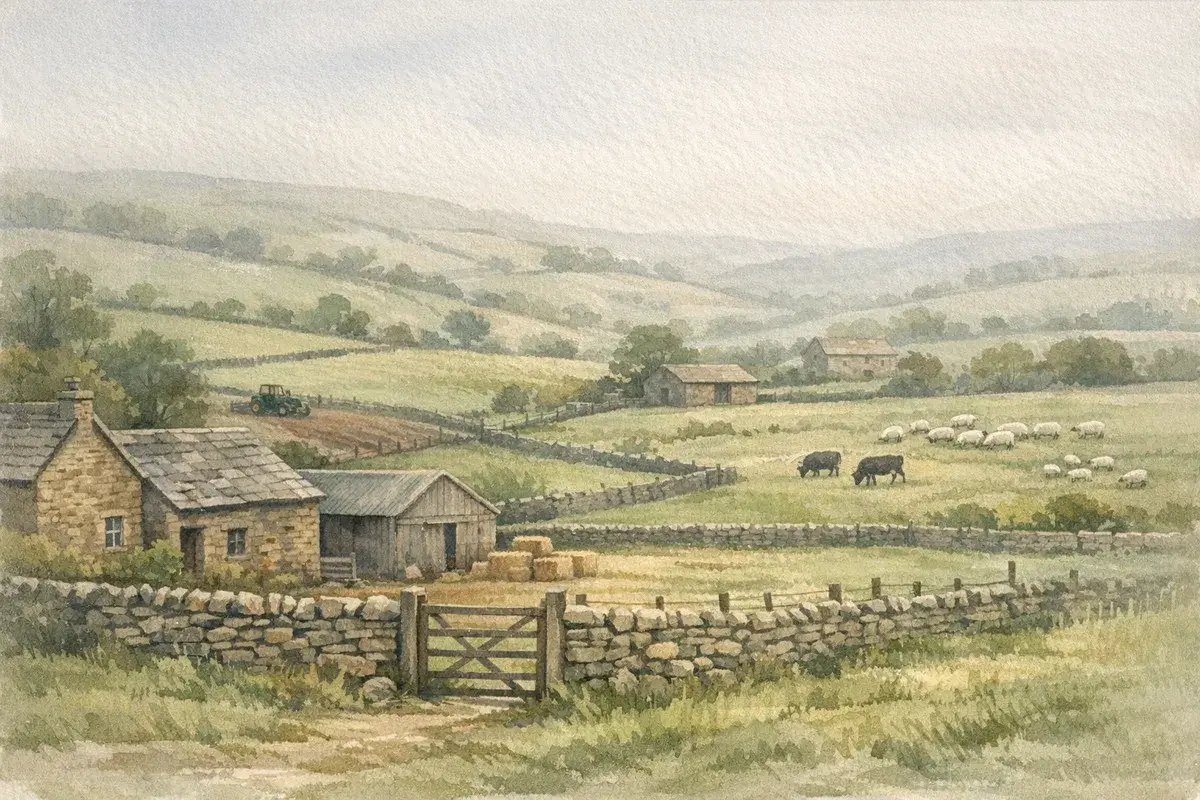
Tenanted land can be the quiet hero of a rural estate: steady income, less day-to-day hassle, and, done properly, excellent inheritance tax planning. But when Agricultural Property Relief (APR) meets real-world letting arrangements, the "simple" idea (relief on farmland) turns into a set of traps: the wrong tenancy type, sloppy paperwork, a dash of development hope value, or a land use that drifts away from agriculture.
If you're a landlord, executor, or a family trying to plan ahead, the key isn't just whether the land is "farm land". It's whether it qualifies as agricultural property, whether it's occupied and used for agriculture in the way HMRC expects, and whether the value you're trying to shelter is actually agricultural value.
Below is a practical UK-focused guide to agricultural property relief on tenanted land: what typically qualifies, what commonly falls outside APR, and the controls you can put in place now (while everyone's calm) to protect relief later (when they're not).
How APR Works For Tenanted Land In Practice
APR is an inheritance tax (IHT) relief that can reduce the IHT charge on agricultural property, but only to the extent the value is agricultural value and only if the occupation/use and ownership conditions are met.
With tenanted land, the main practical point is this: you can still get APR as landlord, even though you're not the one farming. But you're relying on the tenant's use of the land and the legal character of the letting.
For the broader framework and current UK rules, it's worth grounding yourself in AgLand's explainer on how APR works for UK landowners before you start tweaking tenancies or doing estate planning.
What APR Covers (And The Parts That Commonly Fall Outside It)
APR can apply to the agricultural value of:
- Agricultural land and pasture.
- Woodland (but only if it's ancillary to farmland, woodland relief is a separate topic).
- Certain farm buildings that are character appropriate and used in connection with agriculture.
- The farmhouse in some cases, but that's a specialist area: it must be of a character appropriate to the farmland and occupied for the purposes of agriculture.
Where tenanted landowners come unstuck is assuming APR covers the whole value. Common exclusions or partial exposures include:
- Development value ("hope value") above agricultural value.
- Amenity value (pony paddocks with a ‘lifestyle premium', land bought for view/privacy, etc.).
- Non-agricultural income streams on the land (storage lets, solar with non-agricultural character, commercial yards), which may need different reliefs, or none.
A good way to think about it: APR is not a blanket relief on "rural property". It's targeted relief on agricultural property, measured by agricultural value.
The Two-Year And Seven-Year Ownership Tests
For APR you're generally looking at one of two ownership/occupation gateways:
- Two-year test: where the owner has occupied the land for agriculture, or where it has been owned and occupied for agriculture by the owner (or certain connected parties) for two years.
- Seven-year test: where the land has been owned for seven years and occupied for agriculture (typically by someone else, i.e., a tenant) throughout.
Tenanted land often falls into the seven-year route because the landlord isn't the occupier. This is why timing matters so much when families buy land, restructure businesses, or change letting arrangements shortly before death.
If you're working to a deadline, purchase within the family, refinancing, or a change of occupation, don't guess. The practical nuances around the APR ownership time limits can change what "good enough" looks like.
Why Tenancy Type Matters For APR
Tenancy type isn't just a paperwork label. It can affect:
- Whether APR is available at 100% or 50%.
- How valuation works.
- Whether the arrangement looks like genuine agriculture or a dressed-up investment.
In other words, the tenancy is often the hinge the whole claim swings on.
Pre-1 September 1995 Tenancies Vs Post-1995 Tenancies
One of the most important cut-offs in APR on let land is 1 September 1995 (linked to major reforms in agricultural tenancies).
In broad terms (and you should take tailored advice for your situation):
- Older-style tenancies granted before that date can, in some circumstances, restrict the relief to 50%.
- Many post-1995 arrangements are more likely to support 100% APR, assuming the other conditions are met.
This is exactly why "we've always let that field to the neighbour" isn't an answer HMRC accepts. You need to know what tenancy you actually have, when it began, and what rights it gives.
If your goal is full relief, it's worth reading up on what's typically expected for 100% APR on qualifying agricultural property and then auditing whether your tenancy position truly aligns.
FBTs, AHA Tenancies, Licences, And Informal Grazing Arrangements
Here's the real-world hierarchy we tend to see when talking to agents and professional advisers:
- Farm Business Tenancies (FBTs): common, flexible, and usually capable of supporting APR when correctly drafted and the land is genuinely farmed.
- AHA tenancies (Agricultural Holdings Act): can be long-standing: may have different implications for value and relief depending on dates and conditions.
- Licences / grazing agreements: can be fine, but they're also where "informal" becomes "indefensible" if challenged.
- Very informal arrangements (handshake grazing, no clear term, no clear use obligations): these are the ones that often create an evidence gap at the worst possible time, during an IHT claim.
The point isn't that informal is automatically wrong. It's that HMRC will look at substance, and you may need to prove what the arrangement really was.
If you're unsure where you stand, start with the qualification basics and run your situation against the APR criteria HMRC tends to focus on.
Vacant Possession Value Vs Tenanted Value: The Big APR Valuation Issue
If there's one reason APR claims on tenanted land become expensive arguments, it's valuation.
You're not just proving "this is farmland". You're often proving "this part of the value is agricultural value, and that part isn't".
How HMRC Values APR Where Land Is Let
APR is generally restricted to the property's agricultural value, essentially, what it's worth as agricultural property.
When land is let, valuers may look at:
- Tenanted value (reflecting the tenancy terms, rent, security of tenure, restrictions on possession).
- The underlying agricultural value of the land (what a prudent buyer would pay for it for farming).
In many estates, HMRC scrutiny centres on whether the valuation has smuggled in non-agricultural value, particularly where the land sits near settlement boundaries, has road frontage, or has obvious alternative use potential.
Practical tip: ask your valuer to show their working clearly. If your file says "APR claimed: £X" with no narrative, it's harder for advisers to defend later.
When Development Hope Value And Amenity Value Can Create A Tax Exposure
Even if the land is being farmed, the market can price in:
- Hope value: the chance (not certainty) of development in future.
- Amenity value: buyers paying extra for privacy, views, equestrian/lifestyle demand, or "buffer land" next to a house.
APR generally does not relieve these elements if they're not agricultural in nature. So you can end up with a partial IHT exposure even when the farming side looks tidy.
A very common pattern is a small block of pasture on the edge of a village, let to a grazier, clearly agricultural use, but valued at a level that reflects possible future residential use. Your APR claim may cover the agricultural slice, leaving the rest chargeable.
That's not a reason to panic: it's a reason to plan. Sometimes the answer is better evidence and valuation. Sometimes it's structuring (for example, considering whether another relief may apply to part of the value). And sometimes it's accepting that the tax tail shouldn't wag the dog.
The Occupation And Use Tests: Proving Agricultural Use On Let Land
APR on tenanted land lives or dies on a deceptively plain question: was the property occupied and used for agriculture?
Because you're not the occupier as landlord, you need to be able to demonstrate what was happening on the ground.
What Counts As Agricultural Use (And What HMRC Challenges)
Agricultural use typically includes:
- Arable cropping.
- Grazing and grassland management.
- Horticulture.
- Livestock production.
Where HMRC challenges often arise:
- Equine use that looks like leisure rather than agriculture (and in the UK, equestrian is frequently a grey area unless it's genuinely part of a farming operation, such as working horses, or specific qualifying contexts).
- "Storage" that quietly becomes a commercial yard.
- Land that is nominally let for grazing but is effectively used as amenity land.
- Buildings used for non-agricultural trades.
If you're trying to sanity-check your position, it helps to pressure-test it with the same question HMRC will ask: if someone drove past monthly, would it look like land managed as part of agriculture, or like land being ‘kept tidy' for other reasons?
Evidence To Keep: Agreements, Cropping Records, Invoices, And Professional Reports
For tenanted land, evidence is your insurance policy. Keep a file (digital is fine) that includes:
- Signed tenancy/licence documents, plans, and any variations.
- Rent demands/receipts and correspondence.
- Cropping records, grazing calendars, livestock numbers (even if provided by the tenant).
- Invoices for agricultural operations (fencing, reseeding, lime/fertiliser, hedge cutting) and who commissioned them.
- Photographs over time (dated), especially if land use could be questioned.
- Agent or land manager notes from inspections.
- Professional valuations and reports (RICS/CAAV-led where appropriate).
When it comes to actually making a claim, you'll want a clear route through the process and the typical documentation advisers assemble. AgLand's guide to claiming APR in practice is a useful checklist-style companion.
Common APR Pitfalls With Tenanted Land (And How To Avoid Them)
Most APR disasters aren't dramatic. They're slow drift: a letting that starts as farming and becomes something else: a handshake deal that made sense years ago: a diversification that's commercially sensible but left undocumented.
Non-Farming Use, Diversification, And Equine Lettings
Diversification is normal in UK rural business. The mistake is assuming APR automatically follows.
Watch-outs on let land include:
- Equine "grazing" that is actually turnout/paddock use for private horses.
- Let buildings used for workshops, storage, trade counters, or vehicle parking.
- Seasonal uses that are not agricultural (events parking, non-farming storage) creeping from "28 days" into "every year, most weekends".
How to avoid the worst outcomes:
- Be explicit in the agreement about permitted use.
- Inspect and document use periodically.
- If you're granting rights that aren't agricultural, ring-fence the area (plans matter), price it correctly, and assume APR may not cover that part.
In-hand Land, Contract Farming, Share Farming, And "Paper" Arrangements
Tenanted land is one end of the spectrum. The other is "in-hand" farming. Between the two, you'll see:
- Contract farming agreements.
- Share farming.
- Partnerships where one party does the work and another owns the land.
These can be perfectly legitimate and commercially smart. The risk is paper arrangements, structures that don't reflect reality, or where decision-making, risk, and activity don't sit where the documents say they sit.
If you're re-structuring late in the day (for example, changing from a tenancy to a contract farming arrangement shortly before death), HMRC can be sceptical. The deeper issue isn't the label: it's whether the facts support the relief you're claiming.
Practical rule: if your professional adviser can't explain the arrangement in two minutes without wincing, it probably needs tidying.
APR And BPR Together: Where Tenanted Landowners Often Get Caught Out
APR is one tool. Business Property Relief (BPR) is another. On paper, they can complement each other. In real life, mixing them up, or assuming one will cover what the other doesn't, is where some of the biggest IHT shocks appear.
When BPR May Be Needed To Cover Non-Agricultural Value
APR is limited to agricultural value. If your land or buildings have:
- Trading value from a farming business,
- Commercial value from diversified activities,
- Or non-agricultural elements you're trying to protect,
…then BPR might be relevant in some cases.
But BPR has its own conditions and, crucially for landlords, it's sensitive to investment activity.
If you want a clear comparison (without the usual pub-logic), read AgLand's breakdown of how BPR and APR differ in practice. It's often the fastest way to spot which relief you're actually relying on.
Investment Activity Risks, Partnership Structuring, And Who Is Carrying On The Business
Here's the uncomfortable truth: letting land can look like investment rather than trading if it's largely passive rent collection.
That doesn't automatically kill APR (APR is commonly claimed on let land), but it can complicate the wider estate planning picture where you hoped BPR would mop up the "extra" value.
The questions advisers often drill into are:
- Who is actually carrying on the business (you, a partnership, a company, the tenant)?
- Is the activity predominantly trading, or predominantly investment?
- Are diversified enterprises integrated with the farming operation, or effectively stand-alone property investments?
If your structure includes partnerships or companies, get your professional team aligned, solicitor, accountant, land agent/valuer, so the documents, tax position, and real-world conduct match.
Planning Ahead: Tenancy Drafting And Estate Planning For APR
If you only take one idea away, make it this: APR planning is easiest before anyone is ill, before probate is looming, and before you're trying to reconstruct land use from old WhatsApps and bank statements.
Key Clauses And Practical Controls To Support APR While Letting
Good tenancy drafting isn't about being heavy-handed. It's about clarity.
Depending on the type of letting, sensible controls may include:
- A clear permitted use clause tied to agriculture.
- Repairing and maintenance responsibilities that support ongoing agricultural management.
- Restrictions (or landlord consent requirements) on non-agricultural uses, subletting, or change of enterprise.
- Plans that precisely show what is being let, and what is excluded.
- Rights of access/inspection so you can evidence use.
And don't forget the basics: signed documents, correct dates, clear term, and a paper trail that a third party can understand.
Succession, Lifetime Gifts, Trusts, And What To Review Before A Claim Is Made
APR planning often sits alongside succession decisions:
- Do you intend to pass land on during your lifetime?
- Are you using trusts?
- Are different family members involved in occupation and farming?
Lifetime transfers can be effective, but they're not "tick-box". The interaction between gifts, ongoing occupation, and reliefs can be nuanced.
If you're considering transfers while you're alive, AgLand's guide on APR and lifetime gifts is a good starting point for the questions you should be asking your solicitor and tax adviser.
Before a claim is made (typically by executors), do a pre-mortem or pre-claim review if possible:
- Confirm the tenancy type and start date.
- Check the land is still in agricultural use and that this is evidenced.
- Identify any hope value/amenity value hot-spots and get a robust valuation narrative.
- Map diversified uses and decide whether they sit inside or outside the APR expectation.
- Stress-test whether you'd answer "yes" to the question: do I qualify?
If you want a blunt self-check, this is the exact decision tree behind whether you qualify for APR, and it's far better to find the weak link now than in correspondence with HMRC later.
Conclusion
With tenanted land, APR is rarely about one magic clause or one clever trick. It's about aligning four things, the tenancy, the land use, the valuation basis, and the evidence, so that when the time comes, the claim is boring (in the best possible way).
If your land is let, your biggest wins usually come from unglamorous work: tightening permitted use, documenting what the tenant is actually doing, being realistic about hope value, and keeping your professional advisers joined up. You're not trying to "beat" HMRC: you're trying to make the story of the land clear, truthful, and properly supported.
Disclaimer: AgLand.co.uk is a UK agricultural land and rural property matching service, where buyers register what they are looking for and owners advertise directly to the buyers who match, and a rural resource hub. Nothing in this text is intended to be legal, financial, tax, or investment advice. You should do your own due diligence and take guidance from suitably qualified professionals (for example, a solicitor, accountant/tax adviser, and RICS/CAAV-qualified valuer) before acting on any information.