
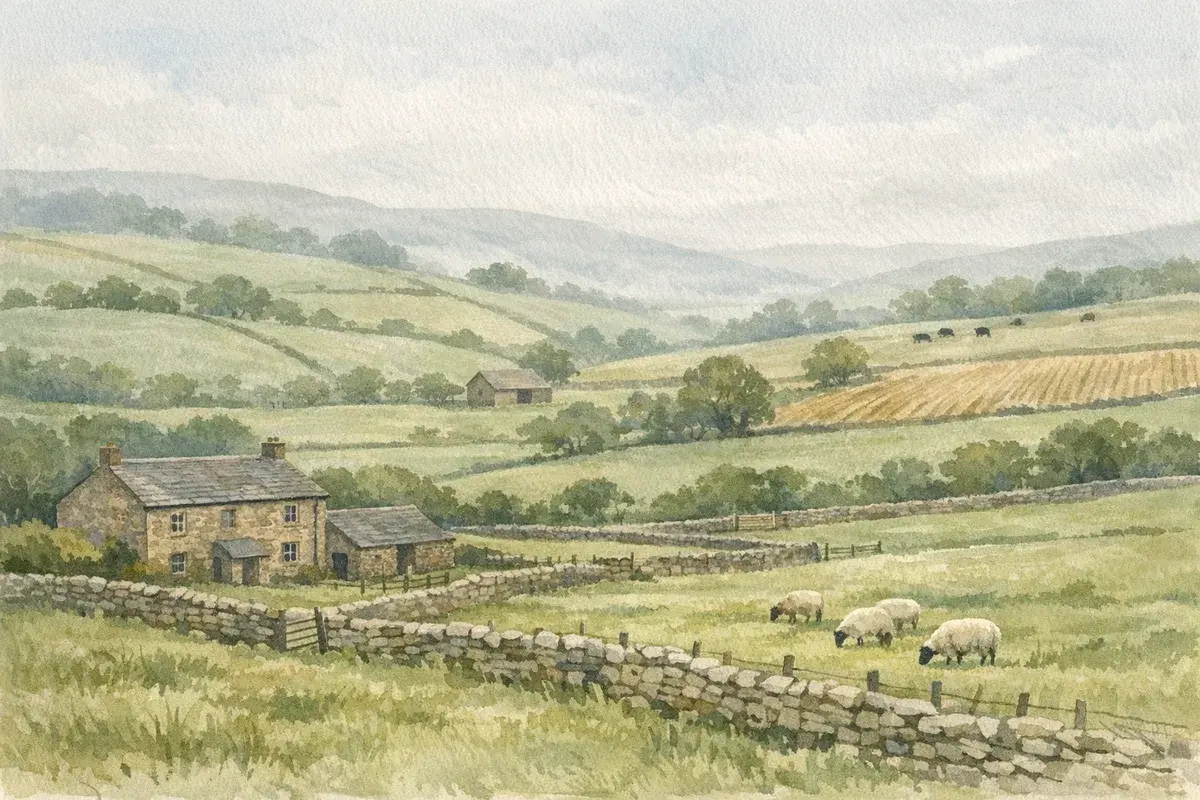
You can live in a farmhouse for decades, assume "the house and a bit of land" will be tax‑free when you sell, and still get caught out by one deceptively simple question: what, exactly, was your home, and what was part of the farm business?
In the UK, Principal Private Residence (PPR/PRR) relief can be extremely valuable for rural owners, but it was designed around homes first, not agricultural balance sheets. Once you add paddocks, tracks, yards, barns, grazing licences, annexes, or a future development angle, the relief quickly becomes a boundary‑drawing exercise, sometimes literally on a title plan.
This guide explains how principal private residence relief and farmland typically interact in practice, where HMRC tends to push back, and what you can do, well before a sale, to protect your position.
What Principal Private Residence Relief Covers (And What It Doesn’t)
PRR is a Capital Gains Tax (CGT) relief that can exempt the gain on the disposal of your only or main residence. In rural settings, the big issue isn't usually the bricks and mortar, it's how much land counts as part of the residence, and whether any of that land has been used for a trade.
The Basics: The Dwelling-House, Grounds, And The "Permitted Area"
At its core, PRR can cover:
- The dwelling-house itself (the home you live in)
- Land that forms its garden or grounds
- Land within the "permitted area", normally up to 0.5 hectares (about 1.24 acres) including the footprint of the house
That "garden or grounds" wording matters. It's not limited to a manicured lawn. It can include things like a driveway, a courtyard, a domestic orchard, a tennis court, or a small paddock used in a genuinely domestic way. But there's a catch: it must be land that is occupied and enjoyed with the residence as such.
When PRR Is Restricted: Partial Letting, Business Use, And Mixed Occupation
PRR isn't an "all or nothing" relief where rural property is concerned. You can end up with:
- Full relief on the house but not the land
- Partial relief where a defined area has non‑residential use
- No relief on parts of a building that are in exclusive business use
Common restriction triggers include:
- Letting part of the property (e.g., a self-contained cottage/annex or holiday unit)
- Using rooms or buildings exclusively for the farm business
- Holding land primarily for agricultural production rather than domestic enjoyment
If you're already thinking "this sounds like a CGT apportionment problem," you're right. It often becomes exactly that.
Where Farmland Fits In: Curtilage Vs Agricultural Land
A lot of confusion comes from mixing up three different concepts:
- Curtilage: the land immediately around the house that's closely associated with it (important in planning and some legal contexts)
- Garden/grounds for PRR: land you occupy and enjoy as part of the residence
- Agricultural land: land used for crops, grazing, or other farming activity
Farmland can sit right next to the house and still not qualify for PRR if, in reality, it's operated as part of the farm. HMRC will look beyond how it feels to you and focus on how it's used, how it's described/valued, and what a reasonable buyer would say they were acquiring.
If you want the wider CGT context on rural disposals, it's worth reading our explainer on CGT when you dispose of farmland, because PRR is only one moving part in the overall calculation.
How Much Land Can Qualify: The 0.5 Hectare Rule And “Reasonably Required”
Most PRR arguments around farmland start and end with the 0.5 hectare point. But it's not a hard ceiling. It's the default.
Understanding The Default Limit In Practice
The default "permitted area" is 0.5 hectares including the site of the dwelling-house, as explained in HMRC's Capital Gains Manual. If your garden/grounds are within that, the conversation is usually simpler, though business use can still restrict relief.
In practice, 0.5 hectares can disappear quickly in rural property:
- Long driveways, turning circles, and service areas
- Mature shelter belts and ornamental woodland that's clearly part of the house setting
- Traditional courtyard layouts where the residence sits within a cluster
But simply owning more land than 0.5 hectares doesn't mean the excess is automatically taxable. The legislation allows more where it's "reasonably required" for the enjoyment of the residence, having regard to its size and character.
Making The Case For More Than 0.5 Hectare
To claim more than 0.5 hectares, you're essentially saying:
- This is a house of a particular character (e.g., a substantial period farmhouse)
- Land beyond 0.5 hectares is genuinely needed to enjoy it as a residence
- The land isn't being held mainly for agriculture, development, or investment
In rural Britain, the most defensible "extra" land tends to look like domestic grounds, not working fields. Think landscaped parkland, gardens, tree belts, and genuinely amenity paddocks (more on paddocks later).
The weak version of the argument is: "It's always been part of the farm, and it's nice to look at." HMRC rarely finds that persuasive.
Evidence That Typically Matters To HMRC
HMRC disputes are usually won (or lost) on evidence and presentation, not on how strongly you feel about it. The things that tend to matter include:
- A clear plan showing what land is claimed as garden/grounds
- A narrative of use over time (what you actually did with the land)
- Physical features: fencing, hedges, formal access, separation from farm operations
- Third-party evidence: agent particulars, photos, maintenance records, invoices
- Valuation logic: how much value attaches to "house with grounds" vs "house with farmland"
If the land is in an environmental scheme, grazed under licence, used for hay, or included in farm accounts, you'll want to think carefully before asserting it's "reasonably required" residential grounds.
And if you're trying to map out what reliefs may apply across the wider holding, our guide to capital gains tax exemptions that can apply to farmland is a useful companion read (especially where PRR only covers part of the picture).
Common Farmland Scenarios And How PRR Is Usually Applied
Most real-world cases aren't neat. They're a patchwork of historic use, family arrangements, "temporary" decisions that lasted 15 years, and land that changed purpose when the market did.
Farmhouse With Adjacent Paddocks Or Amenity Land
A paddock can be the most argued-over feature on a rural sale.
- If it's used as an extension of the garden (kept for ponies for personal enjoyment, mown/maintained like amenity land, not producing income), it may be easier to include within PRR, subject to the area rules.
- If it's grazed as part of the farming trade, let to a neighbour, or produces hay/silage for sale, it starts looking like agricultural land, not "grounds."
A practical rule of thumb we've seen agents and advisers come back to: would a buyer describe it as "a house with grounds" or "a house with land"? If it's clearly the latter, expect HMRC to look closely.
Farmhouse With Working Fields In The Same Title
This is where principal private residence relief and farmland most often collide.
If you sell a farmhouse with, say, 30 acres of arable land in the same title, you should assume:
- PRR is likely to cover the house and a defined area of grounds
- The working fields are unlikely to qualify
- You'll probably need an apportionment of the sale price between the PRR element and the chargeable element
Even when land is right behind the house, it doesn't become "grounds" just because it's convenient.
Equestrian Setups: Stables, Manege, And Grazing
Equestrian is a grey zone because it can be:
- Domestic/recreational (more "grounds-like"), or
- A business (liveries, schooling, events), or
- Agricultural (grazing/hay) depending on the facts
A menage and stables associated with a private riding hobby may feel like part of the residence. But if there's any meaningful commercial activity, payments, regular clients, advertising, staff, expect the PRR argument to narrow.
From a tax perspective, you also need to be honest about what's really happening on the ground. A "private" setup that has invoices, regular customers and a Facebook page is not going to look private for long.
Cottage Or Annex On A Farm: One Home Or Two?
Annexes and cottages can trigger a separate set of questions:
- Is it genuinely part of the same residence (not fully self-contained, used by family, no separate letting)?
- Or is it a separate dwelling with its own occupation pattern?
If it's a second dwelling that's let out or used independently, PRR may not cover it in the same way. And once you've got two dwellings, the "only or main residence" test becomes much more important.
This is a good moment to flag something we see repeatedly: people focus on the building and forget that HMRC can treat land and buildings differently. Your farmhouse might be cleanly within PRR, while the yard, buildings, and a strip of hardstanding are not.
Time, Occupation, And Nominations: Getting The “Only Or Main Residence” Right
PRR only works if the property was genuinely your only or main residence for the relevant period. In rural life, that can get complicated: second farmhouses, temporary moves, renovations, and family members occupying different dwellings on the same holding.
Periods Of Absence And The Final Period Exemption
PRR can still apply during certain absences (for example, where you lived there and then moved out) and there's also a final period exemption.
Important point for planning: the final period rules have changed over the years, and the exact exemption length depends on timing and circumstances. You should take tailored advice before relying on "it'll be covered anyway" logic.
In practical terms, the risk areas tend to be:
- A farmhouse that became more of a weekend base while you lived elsewhere
- A property that was empty for extended periods before sale
- A house that was occupied by staff or tenants after you moved out
Two Homes, One Relief: Making A Valid PRR Nomination
If you have two residences (for example, a farmhouse and a house in town), you may be able to make a main residence nomination, but it has strict timing and factual conditions.
What matters isn't what you'd like your main residence to be for tax. It's whether it's a residence in the real world. HMRC can and does challenge nominations that don't fit the facts.
In the farming context, nominations come up when:
- You move between two farmhouses (succession, retirement, new build)
- You keep the old farmhouse after building/renovating another dwelling
- You've got a second home used during the week for work or family reasons
Temporary Accommodation, Renovations, And Moving Between Farmhouses
Renovations create awkward timelines. You might buy a farmhouse, live in a caravan on site, and only move in once works complete. Or you might live in the farmhouse, then move out while it's refurbished before sale.
The detail that tends to matter is actual occupation as a home: where you slept, where your family life happened, your correspondence address, your council tax position, and the overall pattern of living.
If you're planning a move within the holding (say, from an older farmhouse into a renovated cottage), it's worth speaking to a tax adviser early, before the "temporary arrangement" becomes your evidence trail.
Mixed Use And Trading Structures: When Farming Activity Erodes PRR
Here's the blunt truth: farming is a trade, and trades don't sit comfortably inside a relief meant for private residences. Mixed use isn't fatal to PRR, but exclusive business use and clearly non-residential land can carve away the exemption.
Home Office, Farm Office, And Exclusive Business Use
A bit of admin at the kitchen table is unlikely to cause a PRR disaster. But a room set aside and fitted out as a farm office, used exclusively for the business, can restrict relief for that part of the house.
In reality, many farm offices are "mostly business" but not exclusively so (family computer, household paperwork, storage). Those facts matter. If you want to protect PRR, avoid creating a space that is clearly ring-fenced as business-only without a good reason.
Farm Buildings, Yards, And Tracks: What Sits Outside PRR
Farm yards, hardstanding, general-purpose barns, modern livestock buildings, and operational tracks are typically hard to argue as "grounds." Even if they're near the house, their character is commercial.
This is especially relevant where a sale includes:
- A farmhouse plus traditional buildings with conversion potential
- A separate access that makes the buildings marketable on their own
- A yard that has been used for storage, machinery, livestock handling, or contracting
Once a yard has an independent commercial identity, it's usually unrealistic to expect it to fall within PRR.
Grazing, Hay, Cropping, And Contract Farming: Why "Trade" Matters
Land use is the heartbeat of the PRR analysis.
- Grazing as part of the farming business: points away from PRR
- Cropping and rotations: points away from PRR
- Hay/silage cuts sold or used in the trade: points away from PRR
- Contract farming: still commercial in nature even if you're not driving the tractor
And when land is clearly used for the trade, you're in "other CGT reliefs" territory rather than PRR territory.
If you're weighing up whether a disposal might qualify for business-linked CGT treatment, see our overview of Business Asset Disposal Relief for agricultural land (still commonly referred to by its old name, Entrepreneurs' Relief). It's not a substitute for PRR, but it can be relevant where land is genuinely part of a trading business.
Selling In Pieces: Part Disposals, Overage, And Post-Sale Development Risk
Rural disposals are often staged. You sell the farmhouse now, retain the barn for conversion later, or sell land in parcels over time. PRR doesn't always behave nicely when you do that.
Selling The House First And Land Later (Or Vice Versa)
If you sell the house with its grounds, then later sell an extra paddock or a field, the later disposal may not qualify for PRR, particularly if the land sold later wasn't clearly part of the garden/grounds at the time you occupied the house.
The ordering can matter because PRR is tied to occupation and the idea of land being enjoyed "with" the residence. Once the residence is gone, the argument gets harder.
Calculating Gains On Part Disposals And Setting A Defensible Apportionment
Part disposals require you to apportion base cost and sale proceeds. In rural property, this is where sloppy numbers can create long-term pain.
A defensible approach usually includes:
- A plan clearly showing what is being sold
- Professional valuations allocating value between residential and non-residential elements
- A consistent narrative aligned with marketing particulars and actual use
If HMRC challenges your split, it's rarely a quick back-and-forth. It becomes a technical valuation dispute.
Overage And Option Agreements: When The Tax Position Can Change Later
Overage (clawback) and option agreements are common where land has development hope value.
The tax sting is that later receipts can change the character of what you sold. Money that arrives years after completion can reopen questions about:
- Whether the original land sold was really "grounds"
- Whether you effectively sold land with development value rather than a residence setting
- How the gain should be computed and reported
Get specialist advice before you sign, overage clauses can be commercially sensible while still creating messy tax outcomes if they aren't structured with care.
Planning Permission And Change Of Use: The Point PRR Can Fall Away
The moment land moves from "grounds" to "development" in substance, even before permission is granted, risk increases.
If you apply for planning, promote land, or enter into an option, HMRC may argue that the land wasn't held primarily for enjoyment as part of your residence. The factual timeline matters: what you did, when you did it, and what you intended.
For landowners trying to manage gains by reinvesting, you may also want to look at rollover relief for agricultural land, because where PRR doesn't apply to the land element, reinvestment planning sometimes becomes part of the strategy.
How PRR Interacts With Other Rural Tax Reliefs
PRR rarely sits alone on a farm. The farmhouse might be a residence, the land a business asset, and the wider estate part of an inheritance tax plan. The danger is assuming the reliefs "stack" automatically.
PRR Vs Business Asset Disposal Relief And The "Trading" Question
PRR is about residence. Business Asset Disposal Relief (BADR) is about disposing of qualifying business assets.
The key tension is that land which strengthens your PRR claim (domestic enjoyment) can weaken a BADR narrative (business use), and vice versa.
In real farm sales, the most common pattern is:
- PRR on the house (and possibly some grounds)
- Non-PRR CGT treatment on the working land/buildings
- Potential BADR relevance where the disposal is tied to a trading business structure
PRR Alongside Rollover Relief, Hold-Over Relief, And Reinvestment Planning
Where land is chargeable to CGT (because it falls outside PRR), other reliefs might help depending on circumstances:
- Rollover relief where proceeds are reinvested into qualifying business assets
- Hold-over relief in certain gift situations
The important practical point: you don't want to lock yourself into a sale structure that accidentally blocks a relief you could have claimed with better sequencing or documentation.
PRR And Inheritance Tax Reliefs: APR, BPR, And The Farmhouse Tests
Inheritance Tax (IHT) reliefs, Agricultural Property Relief (APR) and Business Property Relief (BPR), are a different regime entirely, but farmhouse planning often overlaps with PRR thinking.
- APR can apply to agricultural property, but farmhouse qualification has its own tests (occupation, character, and connection to the farm).
- BPR can apply to certain business assets, but the trading vs investment line is crucial.
If you're reviewing your wider estate position, these explainers are a solid starting point:
- How farmhouse rules tend to work for agricultural property relief on a farmhouse
- The broader overview of APR in the UK
And if you're stuck on whether a particular asset should be assessed under one relief or the other, our guide comparing BPR vs APR in practice can help you frame the right questions for your adviser.
Practical Steps To Protect PRR On Rural Property
The best time to protect PRR is not when the buyer's solicitor asks awkward questions, it's years earlier, when you can still shape the evidence.
Title Plans, Land Use Mapping, And Keeping Boundaries Clear
If your "grounds" and your "farm" blur into one another, HMRC has an easier job arguing that the extra land isn't part of the residence.
Practical steps that help:
- Keep title plans tidy and accessible
- Mark up a working plan showing domestic vs agricultural use
- Maintain sensible physical separation where appropriate (fencing, hedges, gates)
- Avoid giving the residential area access rights that are only needed for farm operations
You're not creating an artificial story: you're making the real-world position legible.
Documenting Residential Enjoyment Vs Agricultural Use
HMRC enquiries often turn into a memory test. Don't rely on memory.
Useful evidence can include:
- Photos over time showing domestic use (family events, garden features, maintenance)
- Invoices for landscaping, tree work, garden machinery, domestic fencing
- Notes on whether land was ever cropped, grazed commercially, or put into a farm agreement
- Copies of marketing particulars when you bought (how the property was described)
A small but meaningful tip: if a paddock is genuinely amenity, treat it like amenity, maintain it accordingly and keep records that look domestic rather than commercial.
When To Get Valuations And Who Should Provide Them
If your sale includes a meaningful mix of house, buildings, and land, get valuation input early, ideally before heads of terms are locked.
You're usually looking for a professional who can:
- Value the residential element on a "house with grounds" basis
- Value the agricultural element with appropriate comparables
- Support an apportionment that won't fall apart if queried
In our experience, CGT apportionments are far easier to defend when the valuation work is contemporaneous and properly reasoned.
Questions To Put To Your Agent, Surveyor, And Tax Adviser Before You Sell
Before you sell a farmhouse with land, ask your team questions like:
- "What land are we presenting as residential grounds, and why?"
- "Does the marketing wording accidentally imply agricultural or development value?"
- "If we sell in parcels, what does that do to PRR and the evidence trail?"
- "Are there any overage/option clauses that could recharacterise the land later?"
- "What records should I compile now, before the timeline gets messy?"
And if you're still looking for the right kind of buyer, or a specialist agent who understands the difference between amenity land and farm trade land, it helps to advertise where buyers have already registered what they want, so the enquiries you get come from people whose brief genuinely fits the land.
Conclusion
PRR can be a major relief for UK rural owners, but when farmland is involved, it's rarely as simple as "the house is my home, hence it's all exempt." HMRC will follow the facts: how the land was used, what was "reasonably required" for the home, and whether any parts were really business assets or development plays.
If you take one pragmatic step away from this: treat PRR like a file you're building over time. Clear boundaries, consistent use, and solid records can make the difference between a smooth sale and a long, expensive argument later.
Disclaimer: AgLand.co.uk is a UK agricultural land and rural property matching service, where buyers register what they are looking for and owners advertise directly to the buyers who match, and a rural resource hub. Nothing in this text is intended as legal, financial, or investment advice. You should carry out your own due diligence and seek guidance from suitably qualified professionals (for example, a chartered surveyor, accountant, tax adviser, and solicitor) for your specific circumstances.