
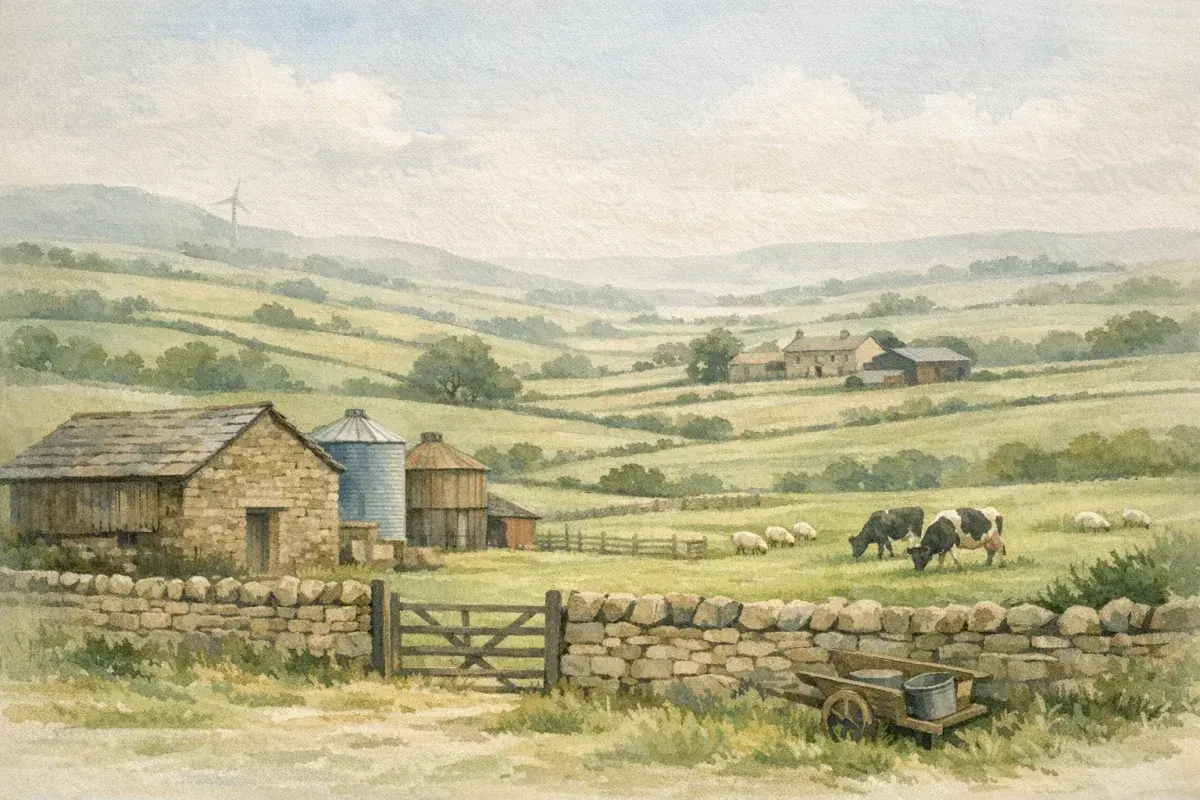
If you've ever looked at an old barn and thought, "That's not worth much," you're not alone. Then a buyer mentions storage income, conversion potential, or a yard that "would be perfect for a few units"… and suddenly you're not talking about a scruffy building. You're talking about value. And value is where capital gains tax (CGT) starts to bite.
CGT on agricultural buildings is rarely as simple as "sell building, pay tax". The tricky bits sit in the grey areas: what the building is used for, whether it's sold with land, how you apportion a farmyard, whether there's development value (even just "hope value"), and whether reliefs like Business Asset Disposal Relief, rollover relief, holdover relief, or even Private Residence Relief might apply.
Below, we'll walk through how CGT tends to work for UK farmers, landowners, and rural investors when agricultural buildings are sold, gifted, repurposed, or carved out of the holding, and the practical traps we've seen catch people out.
What Counts As An “Agricultural Building” For CGT Purposes?
For CGT, HMRC doesn't operate a neat label that says "this is agricultural, this isn't". What matters is what you actually own (the asset) and, crucially, how it's been used and why it has value. A building that's agricultural in everyday language can still produce a taxable gain that's driven by non-agricultural factors.
In practice, you're usually looking at a mix of:
- The building itself (structure, fittings that are part of the property)
- The land attached (curtilage, yard, hardstanding)
- Access and services (tracks, rights, drainage, power)
- Planning status and potential (lawful use, permitted development, change-of-use prospects)
Typical Examples: Barns, Livestock Housing, Grain Stores, Polytunnels, And Yard Areas
Most "bread and butter" farm buildings start life in a clearly agricultural role:
- Traditional barns used for machinery, fodder, or produce storage
- Livestock buildings: cattle sheds, lambing sheds, poultry buildings
- Grain stores and general-purpose sheds
- Polytunnels and horticultural structures (often a fact-specific call depending on permanence)
- Yard areas and hardstanding serving the farm buildings
The CGT point isn't whether the building feels agricultural, it's whether, on disposal, the value is tied to a trading farm use or something else (commercial letting, residential potential, equine use, etc.).
Agricultural Use Vs Mixed Use: When A Building Stops Being "Agricultural"
A common turning point is mixed use. A shed might still sit on a working farm, but if it's been let out for storage, used as a workshop, or adapted for non-farming activity, you may be shifting the story HMRC expects to see.
Mixed use can affect:
- Which reliefs you can claim (and whether you qualify at all)
- How you split ("apportion") the gain between different uses or different parts of a disposal
- Valuation evidence, because the market value can change dramatically once non-agricultural value is in play
If you're relying on permitted development rights to keep options open, it's worth understanding the planning framework properly because planning and tax end up intertwined in the real world. Our guide to using permitted development rules for farm buildings is helpful context when you're weighing up what gives the building its value.
The key mindset: CGT follows the asset and its value drivers, not the name you give the building.
How CGT Applies When You Sell Agricultural Buildings
When you sell, CGT is charged on the gain: broadly, sale proceeds (or deemed value) minus allowable costs. Straightforward on paper, messy in farm reality.
Two themes drive most problems:
- What exactly have you disposed of? (a single asset, part of an asset, or a bundle?)
- Is the price/valuation defensible? (especially where there are family deals, options, or development angles)
If your sale includes land as well as buildings, it's also worth reading up on the wider CGT picture for rural disposals, because the building rarely sits in isolation from the holding. See our deeper guide on capital gains tax on agricultural land in the UK for the broader framework and common land-related traps.
Asset Disposals: Selling A Building With Land Vs Selling It Separately
Selling a building with land tends to be treated as a disposal of an interest in land (i.e., a property disposal), but the commercial reality is that the buyer is pricing:
- the building's utility
- the yard and access
- the site's adaptability
- any planning prospects
Selling a building separately from the farm (for example, carving out a barn and yard on a new title) can create extra moving parts:
- boundary and title work
- rights of way and service easements
- valuations for the carved-out element
It can still be sensible, but expect more scrutiny on apportionments and market value evidence.
Part Disposals And Apportionments: Farmyards, Access Tracks, And Shared Infrastructure
Part disposals are where we see otherwise careful people get caught. If you sell "the barn and a bit of yard", you are often disposing of:
- part of a title
- part of your base cost
- and sometimes part of shared infrastructure value (tracks, drains, power)
The gain must be calculated using a just and reasonable apportionment. In plain English: your figures should make sense to a competent valuer and to HMRC.
Practical examples of things that trigger apportionment headaches:
- a yard that serves both the retained farm and the sold building
- a track that becomes the buyer's only access
- shared water supply, electricity, or private drainage
This is exactly where a chartered surveyor's valuation and a land agent's market context pay for themselves.
Market Value Rules: Gifts, Family Transfers, And Non-Arm's-Length Deals
If you gift a building (or sell it to a relative at under-value), CGT doesn't just vanish. In many non-arm's-length situations, you're treated as disposing of the asset at market value, even if no money changes hands.
That's why family transfers need careful sequencing and advice. If gifting is on your mind, you'll want to understand the market value rule and relief interactions. Our guide on gifting agricultural land and capital gains considerations explains the logic and the common planning pressure points.
One more caution: even where a transfer is "in the family", paperwork matters, valuation evidence, dates, and the reason for any relief claim. HMRC will look for consistency.
Establishing Your Base Cost: Purchase Price, Improvement Costs, And Evidence
Your CGT bill lives or dies on two numbers: disposal value and allowable costs. In farming, base cost is often hard to pin down because buildings were erected decades ago, records are thin, and improvements are bundled into wider farm spend.
The goal is to build an evidence trail that answers three HMRC-style questions:
- What did this asset cost you?
- What capital improvements have you made?
- Can you prove it?
Capital Vs Revenue: Repairs, Replacements, And What You Can Add To Base Cost
Not every spend helps you for CGT.
Typically:
- Capital improvements (that enhance the asset beyond mere repair) can often be added to base cost.
- Revenue repairs (keeping the asset in its existing condition) generally don't.
Real-world farm examples that can fall either side depending on facts:
- Re-roofing a shed: like-for-like replacement may look like a repair: upgrading specification and extending life might have a capital element.
- Concreting a yard: if it creates new hardstanding where none existed, more likely capital: patching existing concrete is typically repair.
- Installing significant new services: three-phase power, new drainage runs, new access, often capital in nature.
Don't DIY the categorisation if the numbers are meaningful. A tax adviser will want to see invoices and understand what changed (and why).
VAT, Grants, And Insurance Proceeds: How They Can Affect CGT Calculations
Three items regularly complicate the "cost" story:
- VAT: whether VAT is recoverable depends on your VAT position and the nature of the transaction (and sometimes option-to-tax status). Recoverable VAT typically doesn't form part of your allowable cost in the same way. This gets technical quickly.
- Grants: if a grant contributed to the cost of a building or improvement, it can affect the net cost you can treat as allowable (facts matter: grant conditions and accounting treatment matter too).
- Insurance proceeds: if you've had a major claim (storm damage, fire) and used the proceeds to reinstate or improve, the CGT and income/capital treatment can become nuanced.
The practical advice is boring but effective: keep the paperwork and get the treatment checked before you assume it's "all deductible".
Record-Keeping That Actually Stands Up To HMRC
If you only do one thing after reading this article: start a property file per building/site.
What tends to stand up best if HMRC ever asks:
- purchase completion statements and SDLT documents (where relevant)
- planning permissions/prior approvals, building regs sign-off, lawful development certificates
- invoices and contracts for capital works (with dates and scope)
- drawings, photos, and a short note explaining what changed
- a timeline of use (agricultural use, then storage let, then vacant, etc.)
- valuations when you do anything non-standard (gifts, intra-family transfers, part disposals)
And yes, it's admin. But it's the kind of admin that can save five figures when you sell.
Agricultural Reliefs And Exemptions That Can Reduce Or Eliminate CGT
Reliefs are where outcomes can swing dramatically, but only if you qualify on the facts, and only if you claim correctly.
A lot of confusion comes from the idea that "farm assets are exempt". They aren't, automatically. There are reliefs and exemptions, and they each have conditions. It also helps to see the charge across a whole holding rather than one building, because gifting land to a child, restructuring a partnership or swapping fields with a neighbour can all be taxed on market value with no money changing hands, as this overview of when farmers face capital gains tax explains.
If you want a plain-English explainer on where people commonly over-assume, our piece on whether farmland is actually exempt from CGT is a useful companion read.
Private Residence Relief Where A Farmhouse And Buildings Are Sold Together
Private Residence Relief (PRR) can apply to your main home, and sometimes to land/buildings that are part of the residence.
The trap is assuming PRR automatically covers:
- nearby barns
- yards
n- paddocks
- large areas of land
PRR depends heavily on whether land/buildings are genuinely part of the "garden or grounds" of the residence and are enjoyed as such. Working farm buildings usually aren't. But every farm is different: proximity, use, layout, and historic pattern matter.
If a farmhouse sale is tied into the disposal of buildings, get advice early, before marketing, because how you split and describe the sale can affect the analysis.
Business Asset Disposal Relief: When Farm Buildings Qualify (And When They Don't)
Business Asset Disposal Relief (BADR) can reduce CGT on qualifying disposals (subject to conditions and lifetime limits). For farmers, it's often in the conversation when you're disposing of:
- assets used in your trading business
- a business (or part of a business)
The big "when they don't" is just as important:
- buildings held mainly for investment letting rather than trading
- situations where the trading use has reduced or stopped long before disposal
- complex structures where ownership and trading entity don't line up (e.g., personally owned buildings used by a partnership/company)
Mixed use (part trade, part let) can lead to partial relief at best.
Rollover Relief And Holdover Relief: Reinvesting Or Gifting Trading Assets
Where you dispose of a qualifying business asset and reinvest in another qualifying asset, rollover relief may allow you to defer the gain (it doesn't usually erase it: it pushes it into the base cost of the new asset).
Where you gift certain business assets, holdover relief can sometimes defer CGT so the recipient inherits your "held-over" gain.
These reliefs are powerful, but they're not casual. Timing, asset type, and business use are key, and documentation is non-negotiable.
If your disposal sits within wider diversification (for example, selling an old building to fund new farm enterprises), the CGT position can shift depending on what you're doing and why. Our guide to CGT and farm diversification decisions explores the common crossroads.
Incorporation Relief For Farming Businesses Moving Property Into A Company
Incorporation relief can apply when you transfer a business to a company in exchange for shares, potentially deferring CGT.
But with land and buildings, the "should we incorporate?" question is rarely just tax. You'll be weighing:
- finance and lender consent
- tenancy structures
- succession goals
- ongoing income extraction
- future sale strategy
The relief's availability depends on whether you're transferring a genuine business as a going concern, not just an asset. This is one of those moments where coordinated advice (tax, legal, and valuation) matters more than cleverness.
Planning, Change Of Use, And Development Value: The CGT Risk Zone
If you want a single sentence that explains most CGT shocks with agricultural buildings, it's this:
The tax tends to follow the value uplift, and the uplift often comes from planning potential, not farming use.
Even if you never apply for permission, "hope value" can still exist if the market believes a change of use is plausible.
From Barn To Dwelling: What Changes When Residential Potential Enters The Picture
The moment a barn is viewed as a residential prospect, you're in a different world of:
- valuation methodology
- buyer type
- and HMRC expectations
Residential potential can show up in several ways:
- prior approval routes (where available and applicable)
- planning permission already granted
- policy signals in the local plan
- nearby conversions creating precedent (not permission, but it affects market behaviour)
That doesn't automatically mean higher CGT rates by itself, CGT rates depend on your wider circumstances and the nature of the asset, but it can mean a much larger gain, and it can change which reliefs are realistic.
Overage, Options, And Promotion Agreements: Timing Gains And Who Pays The Tax
Overage (clawback), options, and promotion agreements are common when a building site has development angles.
The CGT question is often: when is the disposal, what are the proceeds, and who is entitled to what?
Practical pitfalls:
- You sell now at "agricultural value" but agree overage if planning is secured later.
- You grant an option and receive an option fee (tax treatment depends on structure).
- You enter a promotion agreement and the promoter markets the site: your net proceeds may arrive in stages.
This is where getting the contract reviewed with tax in mind is essential, because legal drafting can change tax timing.
Hope Value, Clawback, And Valuations: Getting The Numbers Defensible
Valuation disputes tend to arise when:
- the deal is between connected parties
- the property has obvious development potential but is sold "as agricultural"
- there's a part disposal involving a farmyard/building plot
A defensible valuation usually means:
- a RICS valuation or similarly robust professional report
- clear assumptions (planning status, access, services)
- evidence of comparable local transactions
We've seen people try to "keep it simple" by using a rough per-acre figure or a handshake view of the barn's value. It often looks fine, until it doesn't. And once HMRC is asking questions, recreating evidence years later is painful and expensive.
Common Scenarios For Farmers And Landowners
Let's put the rules into situations we regularly see across the UK.
Selling A Redundant Barn With A Small Paddock Or Yard
This is the classic "carve-out" sale: barn + yard + maybe a paddock for amenity.
Common CGT pinch points:
- Apportionment: what share of your original base cost sits in that carved-out area?
- Hope value: even if it's marketed as storage, buyers price in optionality.
- Access: if you're granting a new right of way, does it affect retained value?
If you're also thinking about the wider disposal and tax consequences, our guide to the tax implications when selling agricultural land helps you frame the building sale within the whole holding.
Replacing Old Sheds And Upgrading Infrastructure Before A Sale
Upgrading can be sensible (better presentation, better functionality, sometimes better price). But tax-wise, you should think about:
- whether the spend is capital (potentially boosts base cost) or revenue
- whether the spend is actually increasing sale value or just making the place marketable
- whether any grant funding reduces the allowable cost you can claim
One practical tip: if you're doing major works close to a sale, keep a short written note explaining why (compliance, safety, operational need) and what changed. It helps your adviser argue the correct treatment.
Transferring Buildings To Children While Continuing To Farm
This is emotionally simple and technically complex.
Questions your advisers will typically ask:
- Are you gifting the building outright, or selling at under-value?
- Will you (or your partnership/company) continue using it? On what terms?
- Is there holdover relief available, and should you claim it?
- What happens if the building later gains residential/commercial development value?
If you're exploring ways to legitimately reduce exposure, our guide on reducing CGT on a land sale is relevant because the strategies often overlap (timing, reliefs, valuations, and structuring).
Letting Out Buildings For Storage, Workshops, Or Equine Use
Letting buildings can be a great income stream, and a quiet tax trap.
Two reasons:
- Reliefs: once an asset looks more like an investment property than a trading asset, reliefs like BADR can become harder to access.
- Use history: if a building was agricultural for 30 years but has been commercially let for the last 5, HMRC will care about the recent facts.
Equine use deserves a special mention because it can blur categories. A yard used for your own farming horses is one thing: a livery or riding operation is another, and planning/use-class issues can feed into valuation and tax.
None of this means "don't let the building". It means go in with eyes open, keep records, and don't assume a future sale will be treated as a pure farm asset disposal.
How To Plan A Sale Or Restructure Without Creating A CGT Headache
You can't eliminate complexity with agricultural buildings, but you can stop it becoming chaos. The most effective planning is usually unglamorous: clarifying boundaries, documenting use, getting valuations early, and aligning the legal structure with the tax position.
Pre-Sale Checklist: Valuations, Boundaries, Title, Rights, And Tax Elections
Before you go to market (or even start "testing the water"), work through this:
- Get the boundary right: what is actually being sold, building only, building + yard, building + paddock?
- Check title and constraints: covenants, easements, wayleaves, ransom strips, access rights.
- Map services: water, power, drainage, comms, who owns what and who pays?
- Document use: trading, letting, mixed use, vacant, dates matter.
- Commission a valuation where needed: especially for part disposals, family transfers, or anything with development angles.
- Sense-check relief eligibility early: BADR/PRR/rollover/holdover aren't afterthoughts.
A lot of CGT pain comes from deciding the structure after an offer is accepted. By then, you're negotiating against the clock.
When To Bring In A Land Agent, Chartered Surveyor, And Tax Adviser
Bring in the right people earlier than you think if:
- you're carving out a site from the holding
- the buyer is hinting at residential/commercial potential
- you're dealing with family transfers or partnership/company changes
- there's overage, options, or promotion terms on the table
A good land agent will tell you how buyers are really valuing the asset. A chartered surveyor will make the numbers defensible. A tax adviser will keep the relief claims honest and the reporting correct.
Thinking of selling? AgLand shows you how many registered buyers already match your land before you pay anything - no board at the gate, no commission, and your details stay private until a buyer asks to connect. Check your matches.
Conclusion
CGT on agricultural buildings is rarely about the building alone. It's about use, history, boundaries, and what the market believes the site could become. If you're selling, gifting, restructuring, or even just letting out a shed "for now", it's worth treating tax as part of the project, alongside planning, title, and valuation, rather than something you bolt on at completion.
The practical win is this: get your evidence together early, be realistic about development value, and don't rely on assumptions about "farm exemptions". When the numbers matter (and they often do), a joined-up team, agent, surveyor, and tax adviser, usually saves you more than it costs.
Disclaimer: AgLand.co.uk is a UK agricultural land and rural property matching service, where buyers register what they are looking for and owners advertise directly to the buyers who match, and a rural resource hub. Nothing in this text is intended as legal, financial, tax, or investment advice. You should carry out your own due diligence and seek guidance from appropriately qualified professionals (for example, a chartered surveyor, solicitor, and tax adviser) before making decisions or entering into transactions.