
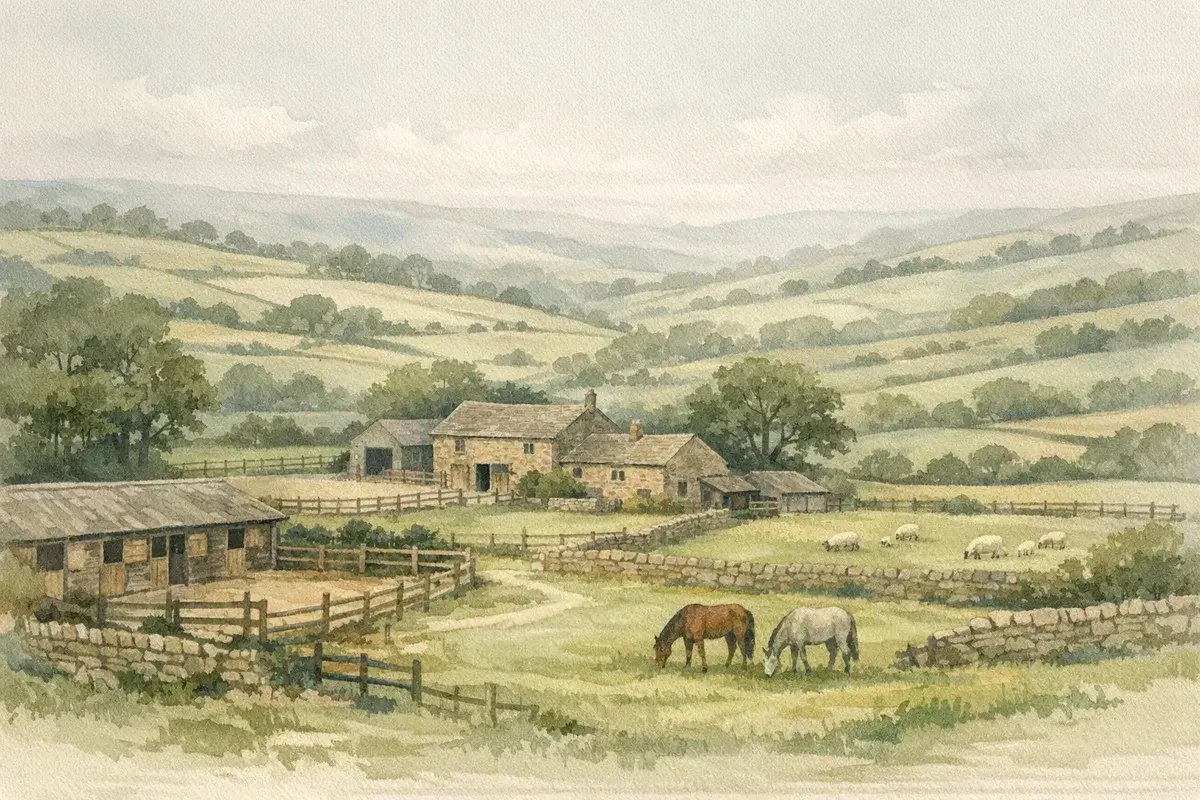
You can fall in love with a livery yard in about 30 seconds: neat stable rows, a smart arena, maybe a café unit with "extra income potential" written all over it. The harder bit is working out whether it's the right yard for you, commercially, legally, and operationally, once the photos stop doing the talking.
If you're searching for a livery yard for sale in the UK, you're not just buying a property. You're buying a workflow, a client base (sometimes), a planning position, and a long list of recurring costs that don't care whether the yard is full or half-empty. This guide cuts through the glossy brochure language and gets you thinking like an owner-operator (even if you plan to appoint a manager).
Start With Your End Goal: DIY, Part, Full, Or Specialist Livery
The biggest mistake we see is people viewing yards before they've decided what they're actually building. "A bit of everything" sounds flexible, but mixed models often create mixed messaging, and that usually means friction, churn, and wasted labour.
Start by pinning down your end goal in plain language:
- Are you aiming for a steady, low-touch income (DIY with sensible rules)?
- A service-led business (part/full livery with staff and systems)?
- A premium or specialist offer (competition, rehab, retirement, youngsters, mares/foals)?
Your model determines the yard layout you need, the compliance burden you'll carry, and the type of customer you'll attract.
Typical UK Livery Models And What They Mean For Profit And Workload
Here's the practical trade-off most buyers only learn after the first winter.
DIY livery
- Workload: Lower day-to-day, but higher "people management" (rules, parking, arena etiquette, payments).
- Margins: Can be decent if overheads are tight and turnout is reliable.
- Risk: Arrears and conflict. You'll want robust contracts and a clear process for late payments.
Part livery (typically includes some daily care, turnout, feeds, mucking out varies)
- Workload: Moderately high. You're selling reliability and routine.
- Margins: Often stronger than DIY if staffing is efficient.
- Risk: Staff cover becomes non-negotiable. If you can't cover sickness/holiday, your service promise collapses.
Full livery
- Workload: High and relentless. Horses don't take weekends off.
- Margins: Can be attractive in the right catchment, but it's an operational business first and a property second.
- Risk: Welfare expectations are higher: clients pay more and expect more.
Specialist livery (competition training, schooling, rehab, retirement, breeding)
- Workload: Variable, sometimes extremely high.
- Margins: Potentially strong if you have credible expertise and the facilities to match.
- Risk: Reputation risk. A couple of unhappy clients (or a welfare incident) can do real damage.
A useful gut-check: if you're buying a yard because you want "a lifestyle," be honest about whether you're choosing property or business. Full and specialist livery are businesses with all the usual pressures, staffing, compliance, customer service, cash flow, plus livestock welfare.
Capacity Planning: Number Of Boxes, Turnout, Arena Use, And Staff Cover
Capacity isn't just "how many stables are there?" It's the relationship between boxes, turnout, storage, and labour.
1) Stables-to-turnout reality
In UK winters, turnout is where you win or lose clients. If the yard can't offer safe, sensible turnout (even restricted), you'll feel it in churn. When viewing, ask yourself:
- How many acres are actually usable for grazing and winter turnout?
- Are there surfaced turnout pens, all-weather areas, or a track system?
- What's the ground like underfoot in January after two weeks of rain?
2) Arena capacity and conflict
An arena can be a selling point or a daily argument.
- Is it one arena for 20+ horses? Expect peak-time congestion.
- Is there lighting, and does it work reliably?
- Is there a booking system in place, and do clients accept it?
3) Storage and logistics
If hay, bedding and feed are awkward to move, your labour costs quietly rise.
- Can a lorry deliver hay without a three-point turn?
- Is there dry, vermin-resistant storage?
- Are there safe routes for wheelbarrows and machinery without crossing client parking?
4) Staffing cover (the bit buyers under-estimate)
Even modest part-livery operations need a plan for:
- weekends (and Christmas)
- sickness and last-minute absence
- safeguarding lone workers and early/late routines
If the vendor says "we just manage," push for specifics. Who covers when the yard manager is off? And what does it cost in real terms?
If you want to broaden your search beyond a classic stable block setup, it can be worth comparing the yard against other specialist equestrian property types, the right answer isn't always "more boxes," it's often "better flow and better land."
Location And Catchment: Where Demand Really Comes From
A livery yard for sale can look immaculate and still be a poor business if the local demand isn't there, or if the local market won't pay for the model you want to run.
Think of your catchment in time, not miles. In much of the UK, clients will travel 10–30 minutes for DIY, and often 20–45 minutes for premium or specialist offers. But the direction matters: people travel from where they live and work, not from a pin on a map.
Client Demographics, Competition, And Pricing Benchmarks
Before you get excited about "income potential," you need to understand what the area will realistically sustain.
Who's your customer locally?
- Commuter belt professionals (often demand full/part livery, floodlit arenas, good hacking)
- Farming communities and lifelong horse owners (more DIY, more price sensitivity, strong expectations on turnout)
- Competition riders (care about arena quality, storage, parking, access to training venues)
- Leisure riders (often want safe hacking, friendly atmosphere, predictable routine)
Do a simple competitor sweep (you can do this without turning it into a dissertation):
- How many yards are within a 20–30 minute radius?
- Which ones are full? Which ones constantly advertise spaces?
- What's included at each price point (turnout, hay, arena use, parking, utilities)?
Pricing benchmarks are only meaningful with context.
A "£X per week" figure can be misleading if it excludes hay, bedding, arena, or if turnout is limited to two hours a day in winter. When you compare prices, compare packages.
Also watch for the silent value of reputation. A yard with long-standing clients and low churn can outperform a shinier yard that's constantly discounting to fill boxes.
Access, Parking, Bridleways, And Transport Links
Access is one of those viewing-day details you either dismiss or regret for years.
Road access and visibility
- Can horseboxes and HGV deliveries reach the site safely?
- Are there tight bends, weight limits, low bridges, or awkward junctions?
- Is there adequate sightline at the entrance?
Parking and turning
A livery yard with poor parking becomes a daily stressor. You want:
- safe pedestrian routes from parking to stables
- turning space for trailers
- designated areas for farriers, vets and feed deliveries
Bridleways and off-road riding
In many UK areas, hacking access is a core selling point. Check:
- proximity to bridleways and permissive routes
- safe road crossings
- whether local routes become waterlogged or impassable
Public rights of way through the yard can also affect privacy and safety (we'll cover this under legal constraints), but it's worth flagging early because it changes how you manage gates, signage, and insurance.
A quick mindset shift: you're not choosing a postcode. You're choosing a daily operating environment, for you, your staff, and every paying client who arrives in the dark after work.
What A Good Livery Yard Includes: Buildings, Land, And Infrastructure
There's "looks tidy" and there's "will still work after three wet winters and an arena harrow twice a week." When you're assessing a livery yard for sale, focus on durability and compliance as much as aesthetics.
A strong yard usually has three things working together:
- Logical layout (safe flow for horses, people, vehicles)
- Resilient surfaces and drainage (year-round usability)
- Boring-but-solid services (water, power, waste, storage)
Stables, Barns, Arenas, And Surfaces: Condition, Drainage, And Lifespan
Stables and barns
- Check roof condition (sheets, ridge, leaks, condensation). A "small leak" becomes a rotten timber issue surprisingly fast.
- Look for ventilation and light. Stuffy barns can increase respiratory problems.
- Measure stable sizes and door widths. Larger horses, rehab clients, and modern expectations can make older, smaller boxes harder to let.
Yard surfacing and drainage
Walk the yard after rain if you can. If you can't, look for clues:
- silt lines on walls
- patched areas and "temporary" gravel dumps
- standing water around gateways and taps
Arena build quality
An arena can be a major asset, but it's also one of the easiest places to hide future spend.
Ask:
- What's the base and drainage design?
- What surface is down (sand/fibre, waxed, rubber mix), and when was it last topped up?
- Is there a membrane, and has it been compromised?
A worn surface isn't just an expense, it affects safety, client satisfaction, and your insurance risk profile.
Fencing and turnout
Good grazing isn't just acreage. It's boundaries, water access, and the ability to rest paddocks.
- Are fences horse-safe and in good order?
- Are there multiple paddocks for rotation and segregation?
- Are there "sacrifice areas" or all-weather pens to protect fields?
Water, Power, Waste, And Biosecurity: The Unsexy Dealbreakers
If you remember one thing from this guide, make it this: the unglamorous infrastructure will make or break your yard.
Water supply
- Is water mains, borehole, or a mix?
- Any history of low pressure, frozen pipes, or supply interruptions?
- How are troughs fed and isolated for maintenance?
In a busy yard, a single vulnerable water point is a hidden operational risk.
Electricity
- Is there a modern consumer unit and sufficient capacity for lighting, clippers, hot wash, office units, CCTV, electric gates?
- Is wiring in barns and stables safe and protected?
Manure management
Manure is constant. Your options affect neighbours, costs, and time.
- Is there a designated muck heap area with sensible access?
- Is removal contracted, farm-spread (where appropriate), or ad hoc?
- What does the vendor currently pay, and how often is it cleared?
Waste, chemicals, and storage
- Are there secure stores for fuel, chemicals, medicines, and sharp items?
- Is there a clear separation between client areas and operational storage?
Biosecurity and disease control
You don't need to run the yard like a hospital, but you do need a plan.
- Is there an isolation stable/pen?
- Can you control movement between liveries and visiting horses?
- Are there protocols for new arrivals, strangles risk, and shared equipment?
Professional yards increasingly win business by being calm, organised, and transparent on health procedures, not by being dramatic about it.
A side note we've seen work well: if the property includes woodland, it can be genuinely useful (shelter belts, hacking routes, privacy) but it also brings management obligations. If woodland is part of the package, it's worth reading up on what ownership entails and what can be income-generating, especially where there's commercial woodland potential attached to a wider rural holding.
Planning, Use Class, And Legal Constraints You Must Check
This is the section that saves people from expensive surprises.
A livery yard is often a blend of uses: equestrian, agricultural, residential, and sometimes commercial (tack shop, café, schooling, events). In the UK, that mix can create planning risk if it hasn't been properly consented, or if the current operation has drifted over time.
Equestrian Use, Change Of Use, And Existing Consents
At a minimum, you need clarity on what the site is legally used for.
Equestrian vs agricultural
Keeping horses for leisure is generally treated as equestrian rather than agriculture. That matters because:
- land use may need to be authorised as equestrian (or mixed)
- permitted development rights that apply to agriculture under the General Permitted Development Order 2015 may not apply in the same way to equestrian operations
If the vendor says "it's always been a yard," don't accept that as proof. You want to see:
- planning permissions for stables/arenas/lighting
- any conditions attached (hours of use, number of horses, restrictions on commercial activity)
- certificates of lawful use (where relevant)
Change of use and intensification
Even if basic equestrian use is established, certain additions can trigger fresh planning considerations:
- floodlighting
- extensions to arenas
- new access points
- additional parking
- events, shows, or regular clinics
And intensification can upset neighbours quickly. If the yard has expanded in practice (more horses, more traffic, more noise) without formal approval, you could inherit a problem.
Residential elements
If there's a house, flat, or lodge on site, check:
- whether it's unrestricted residential use
- whether it's tied to the business (an agricultural occupancy condition or equestrian worker tie)
A tie can be manageable, but it affects lending, value, and your exit options.
Rights Of Way, Covenants, Ties, And Neighbours: Common Rural Pitfalls
Public rights of way
A footpath or bridleway running through a yard isn't automatically a dealbreaker, but it changes management.
- Where exactly does it run? (Don't rely on a brochure map.)
- Are there gates, signage, and safe separation from horses?
- Does it interfere with turnout routes or arena access?
Restrictive covenants
Older rural properties can carry covenants that restrict commercial activity, vehicle movements, or development. Your solicitor should review the HM Land Registry title documents, but you should also ask early:
- Any restrictions on business use?
- Limits on buildings, lighting, signage?
- Historic agreements with neighbouring landowners?
Occupancy ties and neighbour sensitivities
Even where planning is sound, neighbour relationships matter more than people expect.
- Are there nearby houses close to the arena or muck heap?
- Any history of complaints about lights, traffic, smells, or early-morning activity?
You're not just buying buildings, you're buying into a local environment where goodwill has real value.
One pragmatic tip: ask the vendor (and ideally the agent) for a straight answer on "what causes friction here?" You'll learn more from that than from a folder of glossy photos.
Financial Due Diligence: Valuation, Accounts, And Hidden Costs
A livery yard can be a robust rural business, but only if the numbers are real.
When you're assessing a livery yard for sale, treat the asking price as a hypothesis. Your job is to test it using evidence: trading performance, replacement cost, and risk.
How Livery Yards Are Priced: Land Value Vs Trading Value
In the UK market, livery yards tend to sit somewhere between property value and business value.
Asset-backed value (land and buildings)
This is what you'd broadly be paying for the physical site: acreage, stable blocks, arena(s), parking, access, and any residential element. Condition matters: an arena that needs rebuilding is not the same asset as a recently constructed, well-drained one.
Trading value (income and goodwill)
If the yard is sold as a going concern, the price may reflect:
- established client base and waiting list
- staff systems and reputation
- additional income streams (training, schooling livery, lessons, events)
But goodwill only holds if it transfers. If clients are loyal to the current owner personally, expect drop-off.
Be wary of "optimistic upside"
If the business case depends on:
- filling every stable at a top-of-market price
- running clinics monthly
- adding new facilities "subject to planning"
…then you're paying for a plan, not a proven operation. That doesn't mean it's wrong, but you should price risk properly.
Running Costs And Capital Expenditure: Bedding, Forage, Insurance, Repairs
This is where many first-time buyers get caught. You'll have costs whether the yard is full or not.
Typical operating costs to model (varies by region and your model):
- forage supply (hay/haylage) and storage losses
- bedding (and disposal of used bedding)
- utilities (electric, water, lighting, office)
- insurance (public liability, employer's liability if you hire staff, property cover)
- repairs and maintenance (fences, gates, roofs, arena surface)
- professional fees (accountant, health & safety support, legal)
Capital expenditure (capex) you should budget for
Even a well-run yard needs periodic spend:
- arena resurfacing/top-ups
- drainage works (yards, gateways, turnout areas)
- stable roof replacement
- fencing renewal
- upgrading electrics and lighting
A practical approach: ask the vendor what they've spent in the last 3–5 years, and what they believe is "due next." Then sanity-check it yourself during viewings.
Cash flow reality
Livery income is often monthly: your major costs can be lumpy and seasonal. Winter can increase:
- labour (more stable time)
- bedding and forage usage
- surface wear and tear
- vet call-outs and biosecurity pressure
If you're planning to rely on the yard's income to service borrowing, build a conservative cash-flow forecast with a buffer. And assume you'll have at least one annoying surprise, because you will.
Funding The Purchase: Lending, Security, And Tax Considerations
Funding a livery yard purchase in the UK is rarely as simple as "standard mortgage." Even where there's a house on site, the trading element and the land use can push you into commercial lending territory.
Commercial Vs Agricultural Borrowing And What Lenders Look For
Most lenders will want to understand what they're actually lending against:
- Is this primarily a residential property with land?
- A commercial equestrian business?
- A mixed rural holding?
In practice, they'll look at:
1) Security and saleability
- quality and condition of the property
- planning position (consents, restrictions, ties)
- how easy it would be to sell if they had to enforce security
2) Borrower experience and plan
- your background in equestrian operations (or your appointed manager's)
- a realistic business plan with evidence-based assumptions
- contingency plans for vacancy, staff issues, and capital repairs
3) Income coverage
- existing accounts if it's a going concern
- your wider income and assets
- how the borrowing would be serviced if occupancy dips
If the yard includes multiple income streams (lessons, schooling, events), lenders may discount "non-core" income unless it's proven.
VAT, Business Rates, Capital Gains, And Reliefs: Getting Advice Early
Tax in this space is highly fact-specific, so the best advice is: get professional input early, before you commit to a structure.
That said, here are the common areas that trip people up:
VAT
- Some supplies in a livery business can be VATable depending on what's provided and how it's structured.
- If the seller is VAT-registered, the sale may have VAT implications (particularly around opted property or business assets).
Business rates
- Parts of the yard may be rateable (for example, commercial elements beyond purely private use). Check what's currently assessed and what might change if you alter the operation.
Stamp Duty Land Tax (SDLT)
SDLT treatment depends on whether the purchase is residential, non-residential, or mixed-use, and what's included in the transaction. A yard with a house can be particularly nuanced.
Capital Gains Tax (CGT) and reliefs
If you're buying or selling as part of a wider farming or business situation, reliefs may be relevant in some circumstances, but they depend on facts, usage, ownership periods, and structure.
The practical takeaway: don't rely on forum wisdom or what "worked for a mate." Have your accountant/tax adviser and solicitor look at the deal early, because changing structure after exchange can be painful or impossible.
Thinking of selling? AgLand shows you how many registered buyers already match your land before you pay anything - no board at the gate, no commission, and your details stay private until a buyer asks to connect. Check your matches.
Buying Process And Searches: From Viewing To Exchange
The buying process for a livery yard isn't just "view it twice and put in an offer." You're dealing with land, buildings, business operations, and sometimes a residential element, each with its own risk.
What To Ask At Viewing: Safety, Welfare, Turnout, And Client Retention
Go to viewings with a written checklist. It keeps you calm, and it stops you forgetting the awkward questions.
Safety and welfare
- Any history of flooding, loose dogs, or unauthorised access?
- Are there fire precautions: separation of hay/straw, clear access routes, extinguishers?
- Are paddocks safe (no obvious hazards, secure fencing, sensible gateways)?
Turnout and winter management
- How is turnout allocated in winter?
- Are there all-weather options?
- How do they handle field rotation and resting?
Client retention and contracts
If it's a trading yard, ask:
- occupancy by stable count over the last 12–24 months
- notice periods and deposit policies
- whether clients are on written agreements
- what happens to pre-paid livery on a sale
If the vendor can't show basic occupancy history, assume the business performance is less predictable.
Staffing and operations
- Who currently does the daily work?
- Are staff employed, self-employed, or casual?
- Are there written routines (feeding charts, turnout plans, emergency contacts)?
Good yards run on systems, not heroics.
Your Professional Team: Land Agent, Solicitor, Surveyor, And Planning Advisor
A strong team is part of your risk management.
Land agent / rural agent
- sanity-checks value against local market and demand
- helps you interrogate the business case without emotion
Solicitor (rural property experience)
- title, boundaries, covenants, access, easements
- rights of way and any ransom strips
- planning documentation and compliance with conditions
Surveyor
- condition of roofs, structures, drainage indicators
- identification of expensive defects early
Planning consultant (where needed)
- review of existing consents and risk of enforcement
- strategy for future additions (arena lighting, extra stables, parking)
Specialist equestrian input (often overlooked)
If you're not deeply experienced, consider getting an experienced yard manager or equestrian consultant to walk the site with you. They'll spot operational issues, poor flow, unsafe corners, bottlenecks, that a standard building survey might not prioritise.
Finally, pace yourself. If you feel rushed to exchange because "someone else is interested," slow down and get the evidence. In rural transactions, the problem you don't investigate is usually the one you inherit.
Conclusion
A livery yard can be a brilliant acquisition, commercially and personally, when the fundamentals line up: a clear livery model, year-round practicality, solid planning, and numbers that still work when you turn the optimism down a notch.
When you're looking at any livery yard for sale, keep coming back to three questions:
- Does this site genuinely support the service I want to sell (especially in winter)?
- Is the planning and legal position clean enough for me to sleep at night?
- Will the business still work if I have vacancies, rising costs, and a wet February?
If you can answer those confidently, with evidence, not hope, you're negotiating from strength.
Disclaimer: AgLand.co.uk is a UK agricultural land and rural property matching service, where buyers register what they are looking for and owners advertise directly to the buyers who match, and a rural resource hub. Nothing in this text is intended as legal, financial, tax, or investment advice. You should carry out your own due diligence and seek guidance from appropriately qualified professionals (for example, a solicitor, accountant/tax adviser, chartered surveyor, and planning consultant) before making decisions or committing to any transaction.