
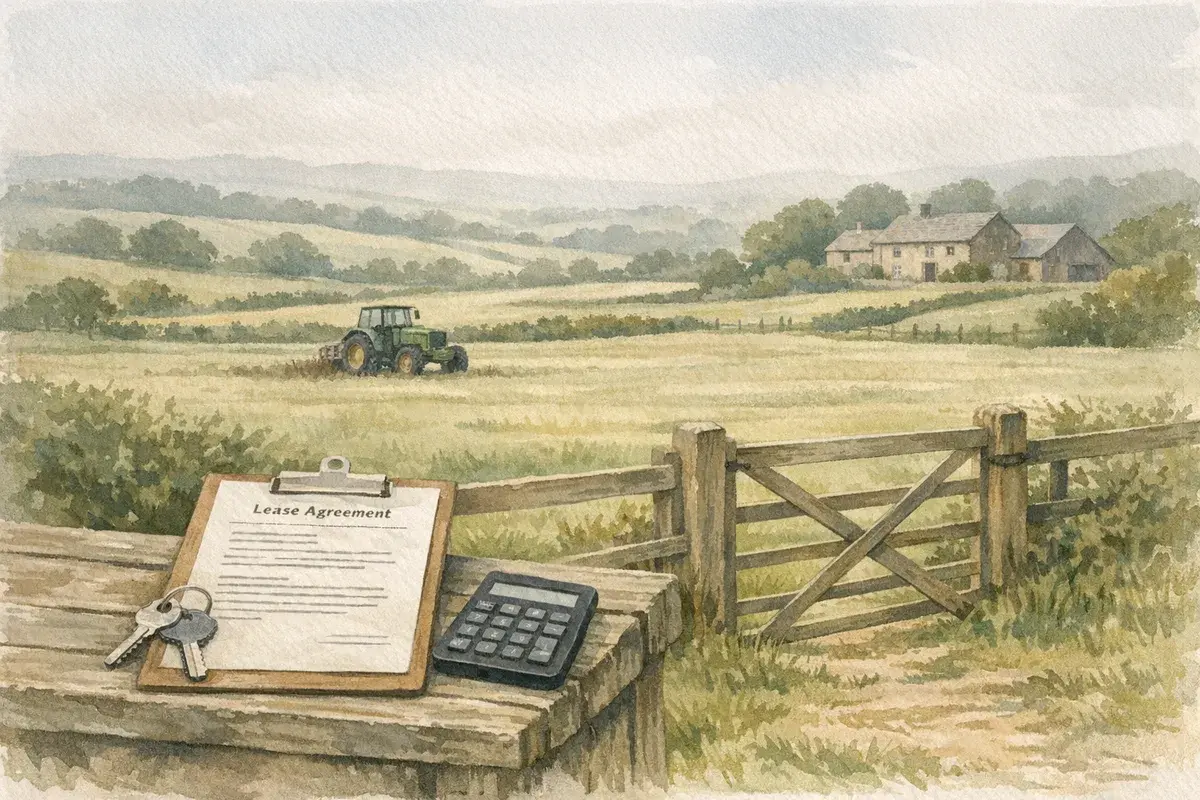
If youare wondering how to rent out agricultural land or rural property without an agent, the short answer is: you can do it, but only if you treat it like a business transaction from day one. Get the use right, set the terms clearly, and check the legal and tax implications before anyone turns a wheel on your ground.
The more practical answer is that renting land privately can work well for pasture, storage, workshops, diversification units, and holiday or residential rural property, provided you know what youre offering and who youre offering it to. Skip the agents fee if you want, but dont skip the basics: valuation, written terms, insurance, planning, and compliance.
For many landowners, handling the deal themselves makes sense, especially on smaller county parcels in places such as Norfolk, Devon, Lincolnshire, Shropshire, and North Yorkshire where local demand can be strong and repeat tenants are often known in the area. The trick is making sure your arrangement suits the land, the tenant, and the law, because a poor agreement can be expensive long after the rent is paid. If a sale rather than a letting is the eventual plan, the private route follows the same logic but adds title and occupation checks, realistic pricing and the job of keeping solicitors moving, all covered in a walkthrough of selling farmland without an agent.
Decide What Youre Renting Out
Start with the asset itself. Agricultural land, farm buildings, cottages, yard space, and mixed rural property all behave differently, and they should be marketed differently too. A grazing paddock in Cornwall is not the same proposition as a grain store on the edge of Cambridgeshire, and a holiday let in Cumbria will need a very different approach from a grass keep arrangement in Somerset.
Be specific about the use. Are you letting land for grazing (pasture use by livestock), cropping, hay or haylage, machinery storage, equestrian use, or a residential occupation? Each one brings different risks, insurance needs, planning questions, and contract terms. If youre not clear, the tenant may fill in the gaps for you, and thats rarely in your favour.
Check The Lands Practical Suitability
Think like a tenant before you set the rent. Is there road access for trailers? Is water available? Are boundaries stockproof? Could the site get bogged in winter, or flood after heavy rain? These details matter more than glossy photos, and they can make or break demand in counties where ground conditions vary sharply from one parish to the next.
A useful rule is to separate productive value from practical value. A field may look tidy, but if the access is tight or the entrance is weak, the true rent will be lower than you expect. We'd argue that checking the entrance gate, ditches, drains, fencing, and the condition of any yards is worth an afternoon at least, because problems discovered later are harder to fix and easier to argue about.
- Access: Can vehicles and livestock enter safely and legally?
- Utilities: Is there power, water, drainage, or fibre?
- Condition: Are buildings weather-tight and usable?
- Constraints: Are there designations, rights of way, or neighbour issues?
Price The Rent And Set The Terms
Once you know what you are letting, you can work out a realistic rent. Agricultural rents vary by land quality, location, duration, improvements, and the type of use, so there is no single county-wide figure that fits every situation. As of August 2025, short grass lets in some lower-pressure areas may still be priced cautiously, while quality land near strong livestock or arable demand areas can command firmer returns than many owners expect.
Private lets often work best when the rent reflects the simplicity of the deal. If the tenant takes on maintenance, weed control, or boundary repairs, the rent may be higher. If youre providing buildings, hardstanding, or service connections, the value rises again. The key is to avoid underpricing out of politeness, or overpricing because a neighbour once mentioned a headline figure at the pub.
| Letting Type | Typical Market Consideration | What Drives Value |
|---|---|---|
| Grazing land | Seasonal and location-sensitive as of August 2025 | Access, fencing, water, pasture quality |
| Farm buildings or storage | Often judged by usable square footage as of August 2025 | Headroom, access, security, services |
| Rural property | Broadly driven by local housing or holiday demand as of August 2025 | Condition, tenure, occupancy rights, planning status |
Choose The Right Agreement
Your paperwork should match the occupation. For agricultural land, many owners use a grazing licence, seasonal agreement, or farm business tenancy depending on the intended use and length of occupation. For rural property, you may need an Assured Shorthold Tenancy equivalent structure where applicable, or a commercial lease if the occupation is for business purposes.
The distinction matters because the wrong document can accidentally grant more rights than you meant to give. That can affect notice periods, repair responsibilities, succession risk, and even whether the arrangement is treated as a tenancy at all. Have your documents reviewed by a qualified solicitor or land agent if theres any doubt, especially where the arrangement is long-term or the holding has been in the family for years.
Don't forget deposit terms, payment dates, break clauses, permitted use, insurance duties, and a clear end date. For rural property, setting out who maintains septic tanks, private roads, boilers, roofs, trees, and boundary hedges avoids the familiar 'I thought you were doing that' conversation later on.
Market And Market Your Land Privately
Marketing without an agent means you must do the agents job properly. The good news is that agricultural audiences are often very local, very practical, and quite responsive to a well-written listing. A clear description, honest photos, and direct contact details often outperform vague marketing copy that sounds pretty but tells nobody anything useful.
Lead with facts. State acreage, soil type if known, access, water, buildings, boundaries, current use, restrictions, and the type of tenant you want. If youre letting by county, use local references that make sense to farmers and rural occupiers. A 15-acre pasture field in East Sussex will attract a different pool of interest from a 40-acre ring-fenced block in Rutland, and your wording should reflect that.
Where Private Marketing Works Best
In many cases, the strongest response comes from local networks rather than broad advertising. Existing neighbours, current contractors, and parish connections can be effective, but you should still vet listeners carefully. Rural demand can be surprisingly competitive where access is good and the lot is straightforward, particularly for storage and grazing.
If you want better leads, use a plain but complete listing format. Include location by county or nearest market town, land type, size, access details, whats included, and the ideal lease length. Good photographs in dry weather help enormously. Muddy winter pictures rarely sell a field, even if the field itself is excellent.
- County detail: Helps local occupiers judge travel and fit.
- Realistic photos: Reduces wasted viewings and misrepresentation risk.
- Clear use class: Stops unsuitable enquiries early.
- Direct contact: Speeds up genuine conversations.
Vet Tenants And Protect Yourself
Finding a tenant is only half the job. The other half is making sure they are the right tenant. Ask for references, details of business experience, and evidence that they can pay on time. If livestock are involved, check husbandry standards, stock numbers, and whether they have suitable handling equipment and insurance.
For rural property, youll want a fuller check. That may include employment income, trading history, deposit affordability, and whether the occupier understands the specific obligations of a country property. Septic tank failures, frozen pipes, stray dogs, yard clutter, and overgrown drainage all create headaches that are easier to avoid than to repair.
Use A Proper Schedule Of Condition
A schedule of condition is a dated record of the propertys state at the start of the letting. It usually includes notes and photographs of fences, roofs, doors, floors, tracks, gates, metering, and any pre-existing defects. This is one of the simplest ways to manage disputes later, and it can save a great deal of time if the occupier leaves damage behind.
Take the photos yourself or jointly with the tenant, and store them safely with the signed agreement. Record meter readings, livestock infrastructure, and the position of boundaries and services. If the property is in a higher-risk county such as Herefordshire, Devon, or Wales-border areas, where weather and access can become an issue, that record becomes even more valuable after a rough winter.
Set rules for inspection periods, notice for entry, subletting, and use of contractors. A rent agreement that is clear on these points is far less likely to sour. Wed argue that the best private lets feel boring in the paperwork, because boring paperwork usually means fewer problems.
Handle Compliance, Tax, And Ongoing Management
Compliance is where private landlords and landowners can trip up. Agricultural land lets may involve environmental rules, spraying restrictions, animal welfare standards, and access rights. Rural property may add gas safety, electrical testing, smoke alarms, legionella control, or HMO-style issues in some cases, depending on use and occupancy.
Tax treatment also needs thought. Income tax, capital gains tax, VAT, inheritance planning, and business property relief can all be affected by how the land is let and what rights you grant. A short grazing licence is not the same as a long lease of buildings, and a residence above a yard is not the same as a pure commercial letting.
Keep good records from the start. Save rent receipts, inspection notes, repair invoices, insurance documents, and correspondence about notices or variations. In practice, this matters just as much in Northumberland as it does in Kent. Disputes usually start with weak paperwork, not with bad weather or bad luck.
If the land is in a sensitive area, check whether there are environmental obligations attached to stewardship, drainage, hedgerows, protected habitats, or public rights of way. If there are buildings, make sure service and safety checks are up to date and that responsibilities are clearly allocated. When in doubt, get advice early. It's cheaper than fixing a mistake after occupation has started.
Conclusion
Knowing how to rent out agricultural land or rural property without an agent comes down to good preparation, honest pricing, careful tenant checks, and airtight paperwork. Get those elements right, and a private letting can save money while keeping you in control of who uses your land and how it is managed.
The best outcomes usually come from matching the right tenant to the right holding, then writing down the details before anyone moves in. Whether youre letting a grazing block, a farm building, or a rural house, that disciplined approach is what protects value and avoids regret.
Disclaimer: AgLand.co.uk is a UK agricultural land and rural property matching service, where buyers register what they are looking for and owners advertise directly to the buyers who match, and a rural resource hub. Nothing in this text is intended as legal, financial, or investment advice. You should carry out your own due diligence and seek guidance from appropriately qualified professionals (for example, solicitors, land agents, surveyors, and financial advisors) for your specific circumstances.